Coloring Techniques: Mixing Colored Pencils and Markers
31 de agosto de 2026
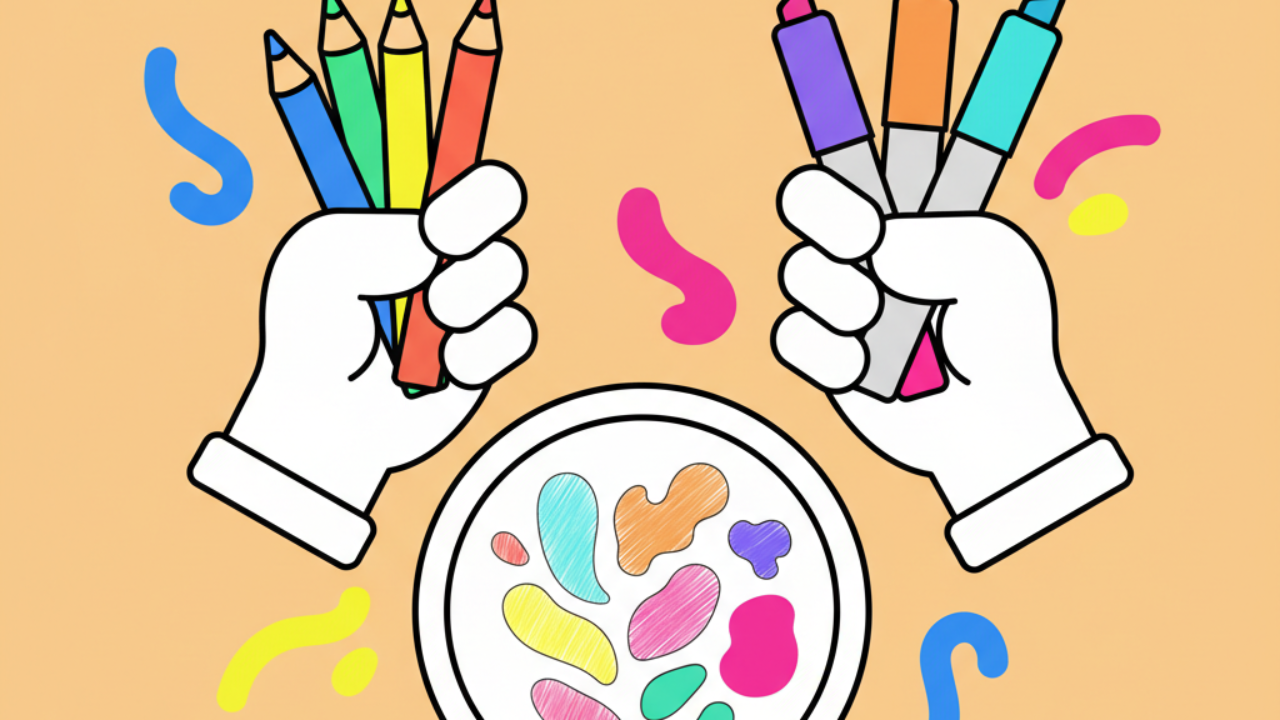
Learn how to combine colored pencils and markers on your printable coloring pages to create amazing shading and texture effects in your artwork.
Mastering the art of mixing materials is the secret to turning simple free printable coloring pages into true frame-worthy masterpieces. When we combine the precision and saturation of markers with the smoothness and blending capabilities of colored pencils, we open up a world of creative possibilities that stimulate fine motor skills and visual perception in both children and adults.
This August, perfect for indoor activities that boost concentration, exploring new textures is an excellent way to spend your time. At Desenhando e Colorindo, we believe every sheet of paper is an invitation to experiment. That's why this guide details how you can level up your coloring activities using what you already have in your school or professional art kit.
Why combine markers and colored pencils?
The combination of these two materials is popularly known as mixed media. Markers offer a vibrant, solid base, ideal for filling large areas quickly or highlighting important outlines. Meanwhile, colored pencils allow you to create gradients, shadows, and volumes that markers—being water or alcohol-based—often can't achieve smoothly.
The perks of saturation and shine
By using markers first, you establish an intense color base. This is especially useful for cute drawings that call for vivid colors. Applying colored pencils on top helps seal the paper's porosity and adds a layer of satin sheen, eliminating those pesky streak marks common markers often leave behind.
Depth and realistic textures
Colored pencils adhere perfectly to dried marker ink, allowing you to add dark shadows to areas already colored. This creates a three-dimensional depth, essential for anyone seeking a digital coloring book finish on a physically printed page.
Pro Tip: Always start with markers in the areas you want darkest or most vibrant, and let them dry completely before going in with colored pencils to avoid tearing the paper.
Recommended materials for best results
To get the best out of your coloring pages, your choice of paper is key. Heavier weight paper (like 28lb or 65lb cardstock / 120g or 180g) handles marker moisture better without warping, allowing the pencil layers to glide on smoothly.
Types of markers
- Standard water-based markers: Excellent for basic fills and fine details in children's line art.
- Alcohol-based markers: Offer more even coverage but require thicker paper.
- Brush Pens: Great for filling large areas with varying stroke thickness.
Types of colored pencils
- Standard school pencils: Work well for light layers and details.
- Watercolor pencils (used dry): Have intense pigmentation that covers markers well.
- Wax-based pencils: The best for "blending" over markers, creating a smooth finish.
Step-by-step: The base and overlay technique
To apply this technique to your drawings to color, follow a logical order that preserves the paper's integrity and ensures color brilliance. The most common mistake is trying to put marker over pencil, which can ruin the marker tip due to the pencil's wax.
Step 1: The marker base
Choose the base color for your drawing. If you're coloring a dinosaur, for example, use a light green marker to fill the whole body. Try to use continuous motions to avoid dark spots where the ink overlaps.
Step 2: Defining shadows with pencils
Once the base is dry, grab a colored pencil in a darker shade (like forest green or navy). Apply it to areas where light doesn't hit: under arms, in skin folds, or along the edges. The contrast between the marker's pop and the pencil's depth will bring the art to life.
Advanced techniques for line art and printables
If you've already downloaded your free printables from Desenhando e Colorindo, you can try techniques that simulate digital art. One trick is using a white pencil to create highlights over areas colored with dark markers.
Popping outlines
Many artists prefer to reinforce the original line art with a fine-tip black marker after finishing the pencil work. This cleans up the edges and makes the drawing "pop" off the page, a very common technique in comics and educational drawings.
Surface texturing
Use markers to create small dots (stippling) or short strokes (hatching) and then lightly cover them with colored pencils. This is perfect for simulating animal fur, grass, or the roughness of stones in complex online coloring scenes that have been printed.
Exploring creativity with AI
At Desenhando e Colorindo, we offer AI-generated drawings with unique levels of detail. These designs are perfect for testing mixed media, as they often feature hatching that guides where shadows should be applied with pencils over the marker base.
Total customization
By using our AI tools, you can generate pages that specifically match your skill level. Simpler designs are great for kids to practice marker filling, while complex art challenges adults to create perfect gradients with colored pencils.
Preservation and finishing tips
After finishing your coloring activities, it's important to make sure the work lasts. Marker ink can fade over time if exposed to direct sunlight. Keeping your drawings in folders or laminating them are great options for preserving the colors.
- Avoid over-saturation: Too much marker in one spot can poke a hole through standard paper.
- Mix brands: Don't be afraid to mix different brands to find the perfect shade.
- Clean your tips: If you use pencil over slightly damp marker, wipe the pencil tip on a scrap piece of paper.
Frequently Asked Questions
Can I use markers over colored pencils?
It's not recommended. Colored pencils contain wax or oil that creates a waterproof barrier. If you use a marker on top, the ink won't stick properly, and the wax can clog or ruin your marker's tip.
What paper is best for printing drawings and using markers?
Ideal options are Offset paper or heavy-duty printer paper with at least 24lb (90g) weight. However, for professional results and to prevent bleed-through, 32lb (120g) paper is the safest choice for your coloring pages.
How do I stop markers from bleeding through the page?
Always place an extra sheet of paper or thin cardboard under the page you're coloring. This protects the other sheets in your pad or your workspace in case the marker ink bleeds through the paper fibers.
Can small children use this mixed media technique?
Absolutely! It's an excellent way to teach hand pressure. Children learn that markers require a light touch, while colored pencils allow for different intensities to create light and dark tones in educational drawings.
Conclusion
Combining colored pencils and markers is a fun journey full of discovery that turns painting into a moment of relaxation and learning. Now that you know the secrets to mixing these materials perfectly, how about putting them into practice? Visit our gallery, pick your favorite free printable coloring pages at Desenhando e Colorindo, and start your next masterpiece right now!
Escrito e revisado por Armando Amaro
Fundador do Desenhando e Colorindo. Todo artigo passa por curadoria e revisão humana antes de ser publicado.