Easy Tips to Color with Markers Without Bleeding Through
10 de setembro de 2026
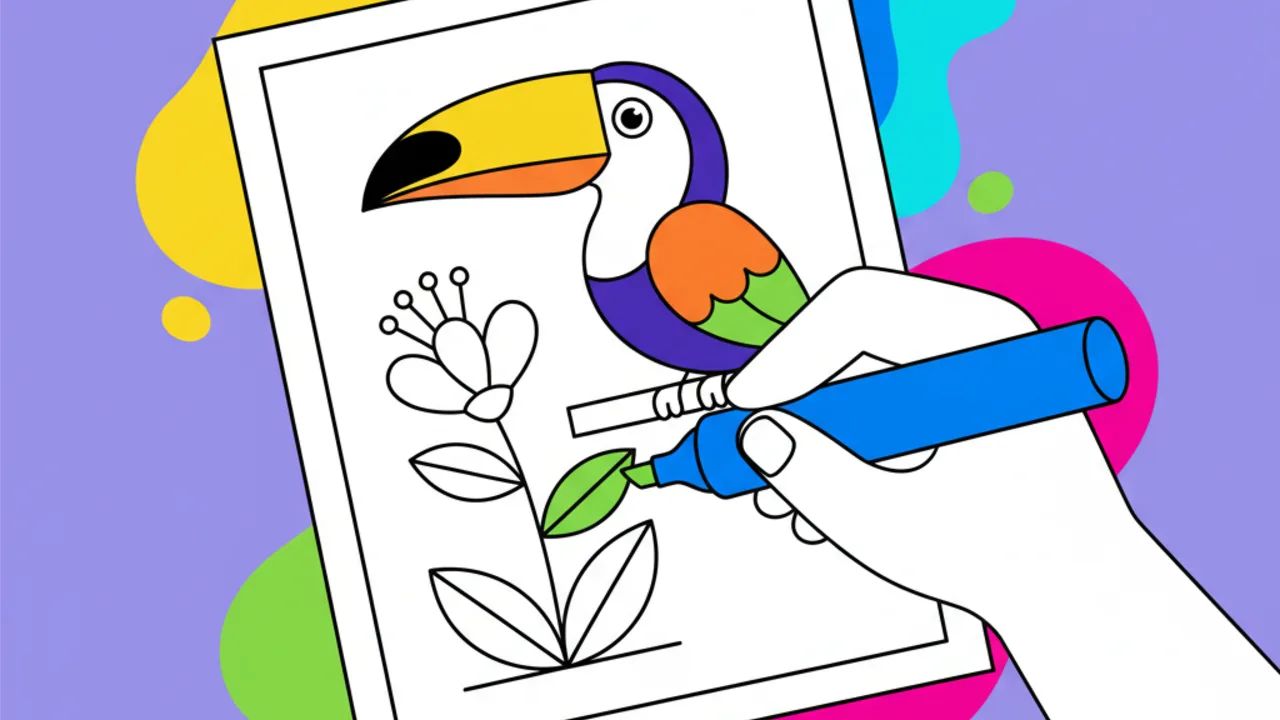
Learn how to color with markers without any smudges! Check out these simple techniques for your Desenhando e Colorindo free printable coloring pages. 🖍️
Learning how to handle art supplies is one of the most exciting parts of the creative process. When you pick one of our free printable coloring pages, the tool you choose makes all the difference in the final result. Markers are a favorite for both kids and adults due to their vibrant colors, but they require a specific technique to avoid unwanted smudges or ink bleeding through the lines.
Choosing the right paper for printable coloring pages
The first step to ensuring your coloring sheets look perfect is choosing the right paper. Thin paper tends to absorb marker ink too quickly, which causes a blurring effect or makes the paper pill. For the best experience, we recommend printing your drawings on paper with a weight of 90g/m² (24lb) or 120g/m² (32lb) or higher.
Why paper weight matters in kids' line art
When working with kids' line art, the lines are usually thicker to make filling them in easier. If the paper is too porous, the ink spreads through the fibers before you can even control the stroke. A firmer paper keeps the pigment on the surface, allowing the color to stay uniform without overlap marks.
- 120g Offset Paper: Ideal for standard markers.
- Canson Paper: Excellent for those who love blending colors.
- Matte Photo Paper: Delivers ultra-vibrant colors.
Always place a scrap sheet or a piece of cardstock under your coloring page. This prevents marker bleed from staining your desk or the next page of your printed digital coloring book.
The preventive outline technique
One of the most effective ways to stay inside the lines is to create an inner border. Before filling in large areas of your cute drawings, draw a thin line with the marker itself just inside the original black edge of the drawing. This creates a "safety barrier" that prevents you from accidentally bumping into the outer line when you're in a hurry.
Consistent strokes and one-way motion
To avoid dark blotches in the middle of your drawing, you should always color in the same direction. Circular motions or random back-and-forth strokes create ink buildup in specific spots. Opt for long, continuous strokes, following the shape of the figure you are painting on Desenhando e Colorindo.
How to handle AI-generated drawings
Nowadays, many AI-generated drawings feature tiny, complex details. For these cases, conical tip markers or fine-liners are your best friends. They allow you to fill in detailed areas without the risk of ink bleeding into the neighboring space.
Using light colors first
A golden rule in coloring activities is to always start with the lightest colors. If you make a small mistake with yellow, it's easy to cover it with blue or green. However, if black or dark blue smudges, it's nearly impossible to fix without ruining the aesthetic of your printable art.
Maintaining your markers for best results
Dry markers or frayed tips are the main causes of scratchy or blurry-looking drawings. Always keep your tools capped and avoid pressing the tip too hard against the paper. The secret to markers is a smooth glide, letting the ink flow naturally.
- Cap your marker immediately after use.
- Store your cases horizontally to keep the ink evenly distributed.
- Clean the marker tip on a paper towel if it touches another color.
Online coloring vs. Paper coloring
While online coloring is convenient and mess-free, the tactile experience of using markers on paper helps develop fine motor skills. At Desenhando e Colorindo, we offer both options so you can test your color combinations digitally before moving to physical paper.
Tips for filling large areas
If your printable drawing has a large background, like the sky or the sea, avoid using just the very tip of the marker. Tilt the marker body to use the side of the nib, covering more space with fewer passes. This reduces the "streaking" that often appears when ink dries at different times.
The secret of patience in printable art
Coloring is a relaxing activity. Rushing is the greatest enemy of marker art. Wait a few seconds before coloring an adjacent area with a different color to prevent the inks from bleeding into each other at the border. This is essential for educational drawings where color distinction is important for learning.
Using layers intelligently
Some markers allow for layering to create shadows. However, only do this once the first layer is completely dry. If the paper is still damp, the friction of the marker tip can tear the fibers, creating a permanent smudge and damaging your coloring page.
Frequently Asked Questions
How do I stop markers from bleeding through the paper?
The best way is to use heavier weight paper (above 120g/32lb) and avoid going over the same spot multiple times. Using a protective sheet underneath the drawing is also a must to protect your workspace.
Can I mix markers with colored pencils?
Yes! An excellent technique is to use markers for shadows and vibrant areas and colored pencils for smooth shading and gradients. This adds depth to your printable coloring pages.
What should I do if the marker smudges outside the line?
If it's a small mistake, you can try to hide it using a white gel pen to cover the smudge or turn the error into a new element of the drawing, like a leaf or a landscape detail.
What are the best markers for toddlers?
For young children, thick-bodied markers (like "broad line" or safety-tip markers) and washable inks are best. They are more pressure-resistant and make cleanup easy if the child colors off the paper.
Now that you know the best techniques for using your markers perfectly, why not put your knowledge to the test? Explore our various categories here at Desenhando e Colorindo, choose your favorite themes, and enjoy our free printable coloring pages to create amazing and vibrant works of art today!
Escrito e revisado por Armando Amaro
Fundador do Desenhando e Colorindo. Todo artigo passa por curadoria e revisão humana antes de ser publicado.