Best Color Combinations for Painting Nature Landscapes
25 de agosto de 2026
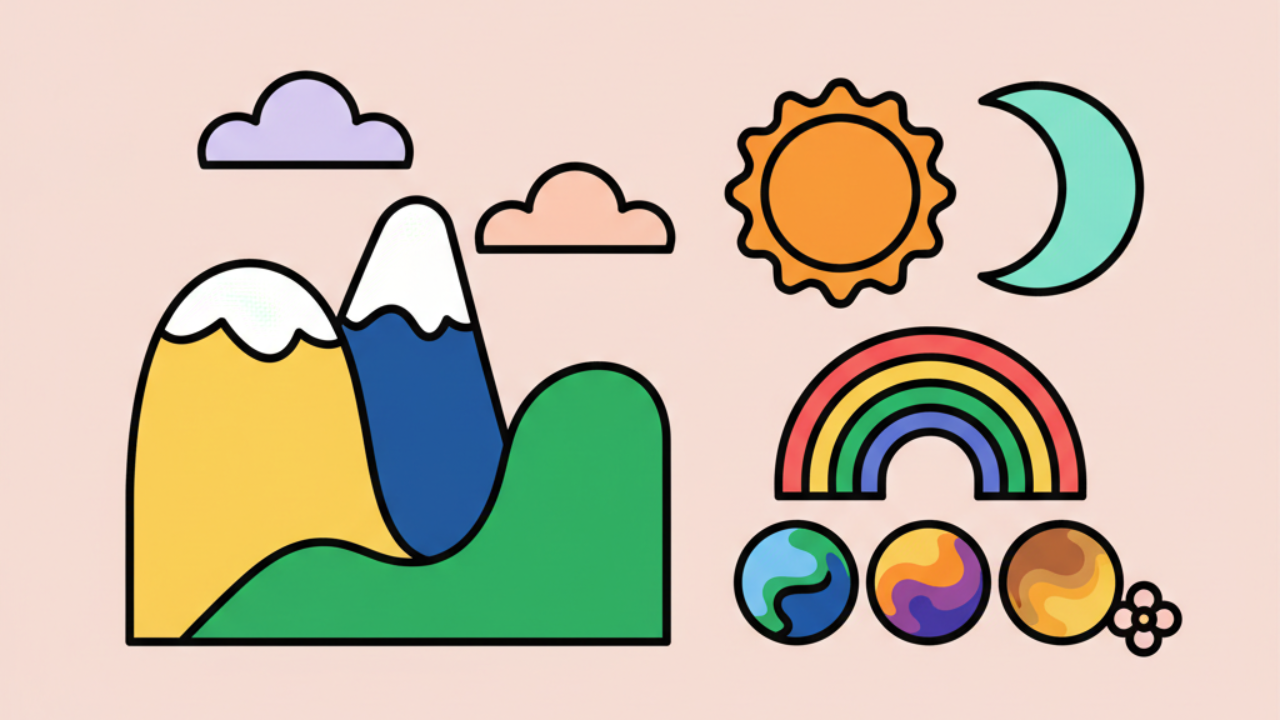
Discover the best color palettes to bring nature landscapes to life in your coloring pages, creating stunning artwork throughout the month of August. 🎨🌿
Exploring the Color Palette in Nature Coloring Pages
Coloring natural landscapes is one of the most relaxing and rewarding coloring activities out there. When you download your free coloring and printable pages here at Drawing & Coloring, you enter a world of possibilities. In August, the weather in Brazil often features earthy tones and clear skies, which serves as perfect inspiration for your creations.
To begin, it's essential to understand that nature isn't just about green. There are infinite variations of shades that can transform a simple kids' line art into a true masterpiece. When choosing your colors, think about the lighting: morning sun calls for yellower, softer tones, while sunset demands intense oranges, purples, and reds.
When using coloring sheets of forests, for example, try mixing different green colored pencils. Use moss green for shaded areas and lime green for leaves that receive direct light. This depth brings educational drawings to life and helps develop children's visual perception.
Harmonious Combinations for Forests and Woods
When we talk about forests, analogous harmony is an artist's best friend. This means using colors that are close to each other on the color wheel. For a dense forest, the combination of green, blue-green, and yellow creates a cohesive and natural look. These coloring activities are excellent for teaching about the diversity of Brazilian flora.
Another valuable tip is to use earthy tones for tree trunks and soil. Go beyond basic brown; add touches of sienna, ochre, and even a bit of gray to give texture to tree bark. If your digital or printed coloring book has moss details, small vibrant green spots over dark brown create an impressive realistic effect.
Practical tip: To create depth in forests, color background trees with lighter, bluer colors (atmospheric perspective) and foreground trees with more saturated, darker colors.
Essential Elements for Painting Trees
- Light and Shadow: Determine where the sun is coming from before you start coloring.
- Texture: Use small circular motions to simulate foliage.
- Variety of Tones: Never use just one colored pencil for the entire canopy.
- Contrast: Use dark brown for trunk crevices and beige for illuminated parts.
The Mystery of Mountains and August Skies
Mountains offer a unique opportunity to use colors that go beyond the obvious. Depending on the distance, a mountain can appear bluish or even purple. In cute drawings of distant landscapes, apply light layers of sky blue over gray to give that sense of vastness. This helps create a relaxing and professional scene.
August skies are often very blue and clear. For coloring online or on paper, create a gradient starting with a darker blue at the top of the page and lightening as you approach the horizon line. If your drawing includes clouds, leave the paper white or use a very light gray at the bases to give volume, avoiding the use of blue inside the cloud.
For rocky mountains, the combination of cool gray, lavender, and touches of white (or correction fluid/white paint) for snow at the top is foolproof. Remember that in educational drawings, showing different biomes helps children understand geography while having fun with colors.
Painting Water: Rivers, Lakes, and Waterfalls
Water is one of the most challenging and fun elements in printable art. The secret to water isn't pure blue, but reflection. If the river is in a forest, it should have touches of green. If it's under a blue sky, it will reflect that color. For beginners, the layering technique is the most recommended.
Techniques for Aquatic Effects
- Transparency: Use long, soft horizontal strokes to represent the calm surface of a lake.
- Foam and Movement: In waterfalls, leave white areas to simulate the movement of water hitting rocks.
- Reflections: Lightly color the trees on the bank within the water, but in a blurred way.
- Depth: Use shades of navy blue or indigo for the deepest parts of the river.
When working with AI-generated drawings from Drawing & Coloring, you'll notice that water lines are fluid. Take advantage of these curves to guide the direction of your pencil or digital brush. Fluidity is key to a convincing natural landscape.
Sunset: An Explosion of Warm Colors
Nothing beats the beauty of a sunset in a natural landscape. This is the time to pull out the reds, oranges, and yellows from your box. The classic sunset combination involves yellow near the sun, transitioning through orange, red, and ending in a purple or dark blue at the top of the sky. This transition is called a gradient and is an excellent coloring activity for training motor coordination.
When coloring a sunset in your coloring pages, remember that everything in the foreground (in silhouette) should be colored in very dark colors, such as black or dark brown. This creates a dramatic contrast that makes the sky colors pop. It's a simple technique that transforms basic drawings into artistic-level illustrations.
Also, try adding touches of hot pink or violet to the edges of clouds. In nature, the reflection of sunlight on atmospheric particles creates vibrant colors that enchant children and adults. Use these kids' line arts to explore color theory in a practical and playful way.
The Psychology of Colors in Nature
The colors we choose for our landscapes affect our mood. Shades of blue and green are known to calm, making them ideal for relaxing moments before sleep. Yellow and orange tones, on the other hand, bring energy and joy, perfect for a productive afternoon of online coloring or on paper.
When offering coloring and printable pages to children, encourage them to express what they feel through colors. A tree doesn't always have to be green; if a child is feeling creative, they can color a magical blue or pink tree. At Drawing & Coloring, we believe that creative freedom is the greatest benefit of art.
For adults, focusing on tiny details of landscapes—like wildflowers or stream pebbles—acts as a form of active meditation. Using complementary colors, such as purple flowers against a yellow center, creates a focal point that draws the eye and organizes the visual composition.
How to Choose Materials for Coloring Landscapes
The choice of materials directly influences the outcome of your color combinations. For educational drawings that require a lot of blending, watercolor pencils are excellent, as they allow for smooth transitions with a damp brush. Crayons are great for quickly filling large areas of sky or grass in coloring activities for younger children.
If you prefer convenience, online coloring tools offer pre-made palettes that ensure instant visual harmony. Regardless of the medium, experimentation is key. Test colors on a separate piece of paper before applying them to your main drawing to ensure the combination is exactly what you envisioned.
Frequently Asked Questions
What are the primary colors for painting nature?
While primaries are blue, red, and yellow, for nature you'll use a lot of blue and yellow to create various shades of green, and red mixed with yellow to create earthy and autumnal tones.
How do I color a realistic sky without leaving pencil marks?
Color with a light hand, using constant circular motions. Use a tissue or a blending stump to spread the pigment and create a smooth misty or gradient effect on the horizon.
Can I use unnatural colors in landscape drawings?
Absolutely! At Drawing & Coloring, we encourage the use of AI-generated drawings to create fantastic worlds. Purple trees, neon rivers, and green skies are incredible ways to exercise imagination.
What's the best paper for printing landscape drawings?
For regular colored pencils, 90gsm copy paper is sufficient. If you're using paint or watercolor pencils, we recommend paper with a weight above 180gsm to prevent the sheet from wrinkling with water.
Now that you've mastered the best color combinations to bring nature to life, it's time to put that knowledge into practice! Explore our gallery, choose your favorite images, and start right away. Don't waste time: access our hundreds of options, use your imagination, and enjoy printing and coloring your masterpieces today at Drawing & Coloring!
Escrito e revisado por Armando Amaro
Fundador do Desenhando e Colorindo. Todo artigo passa por curadoria e revisão humana antes de ser publicado.