Step-by-Step Guide: Painting with School Watercolors Without Smudging
28 de setembro de 2026
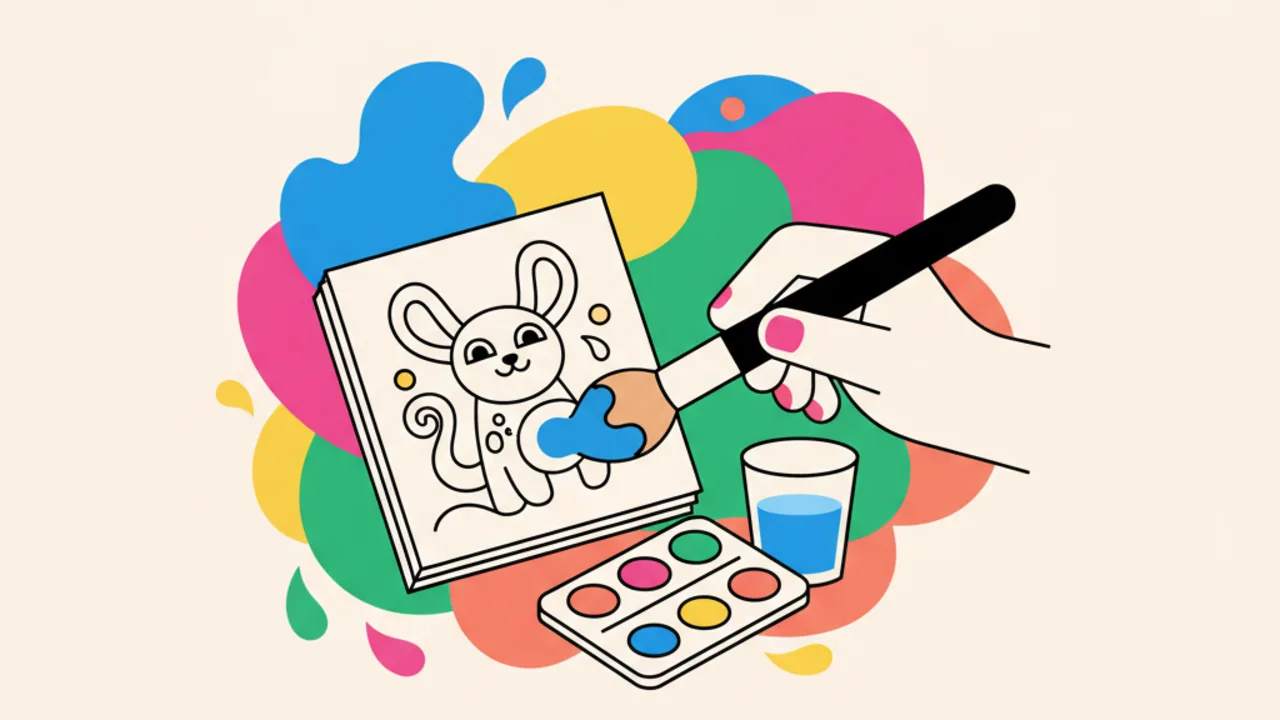
Learn how to paint your favorite coloring pages using school watercolors with simple techniques to avoid smudges and achieve a flawless finish.
Preparing your printable coloring pages for watercolor
Before you dip your brushes in the water, the first step to success is choosing the right paper. Most of the printable coloring pages available at Desenhando e Colorindo are downloaded in PDF or image format. To use watercolor, avoid standard 75g (20lb) copy paper, as it wrinkles easily.
We recommend printing your free coloring sheets on paper with a weight of at least 180g (65lb cover). This ensures the fibers can handle the moisture without tearing. If your printer allows it, specific watercolor paper or cardstock will ensure the kids' line art stays crisp while you apply layers of color.
In addition to the paper, check your printer's ink. If it's an inkjet, water might smudge the black outlines. A pro tip is to run a hairdryer over the fresh print or wait 24 hours for the ink to fully cure before you start painting your educational drawings.
Essential supplies for painting free drawings without the mess
School-grade watercolors are a wonderful gateway into the world of coloring activities. To avoid smudges, you don't need expensive materials, just the right items organized on your workspace.
- School watercolor set (pans or tubes).
- Two jars of water: one for cleaning the brush and one for clean water pickup.
- Soft-bristled brushes (a round one for details and a flat one for filling areas).
- Paper towels or an absorbent cloth to control the water load.
- Masking tape to secure the edges of the paper to the table.
With these items ready, you can turn simple coloring pages into real masterpieces. The secret to watercolor is patience and moisture management—something both kids and adults can master by practicing with our cute drawings.
Quick tip: Always test the paint color on a scrap piece of paper before applying it to your main drawing. School watercolor pans often look much darker than they actually appear on paper once dry.
The "light hand" technique: controlling the water
The most common mistake when painting printable coloring pages with watercolor is using too much water. When puddles form, the paper saturates and the pigment goes out of control, bleeding past the line art. The "light hand" technique involves dampening the brush and dabbing off the excess on a paper towel before touching the paint.
When applying color to drawings for kids, work in thin layers. It's much easier to darken a color by adding more pigment later than to try and lighten an area that got too dark or messy. Controlling the water is what differentiates a blotchy painting from a smooth, professional-looking fill.
Working from light to dark
Unlike gouache or acrylic paint, with watercolor, we start with the lightest tones. If you are coloring nature drawings, apply the yellow or light green first. Wait for it to dry slightly and only then add shadows with deeper tones.
This order prevents dark colors from dominating the drawing and causing that dreaded "muddy" look. In the AI-generated drawings on our site, the details are rich, and this technique helps preserve the definition of every element in the scene.
How to keep paint inside the lines
Keeping pigment within the borders of children's line art takes technique. One of the most effective ways is the "dry paper" technique. Keep the paper dry and use only a slightly damp brush. This prevents water from carrying the pigment outside the desired area.
Another trick for those using printable art is to apply a very thin layer of white wax crayon over the outline lines. The wax repels water, creating a natural barrier that keeps the watercolor exactly where you want it to stay.
Strategic drying between neighboring areas
If you paint two adjacent areas while both are wet, the colors will bleed into each other, creating a blur. To keep your printed digital coloring book looking sharp, paint one section (like a flower petal) and skip to a distant section while the first one dries.
On humid days, drying time might take a bit longer. You can use a hairdryer on the cool setting to speed up the process, ensuring the colors on your coloring sheets stay vibrant and distinct.
Exploring color mixing with school watercolors
School watercolor sets offer a limited palette, but the possibilities are endless through mixing. Use the lid of the set as a palette. Mix a little blue with a drop of red to create different shades of purple for your cute character drawings.
Remember that transparency is watercolor's greatest virtue. Adding water makes the color lighter, while adding more pigment makes it intense. Practice this variation on educational sheets, teaching kids how colors transform with light.
- Green + Yellow = Vibrant lime green.
- Red + Yellow = Sunset orange.
- Blue + Green = Turquoise for ocean drawings.
- Brown + Yellow = Skin tones or sand.
Finishing and caring for your printed art
After you finish coloring your printable sheet, resist the urge to retouch areas that are still damp. Friction from the brush on wet paper can cause "pilling" (tearing of the fibers). Let the work dry completely flat to prevent the paint from running.
Once dry, you can redefine the line art contours with a waterproof black pen or a fine liner. This brings the drawing back to life, highlighting details that the paint might have softened. Storing your work in a folder protects the coloring pages from direct light, preserving the watercolor colors for longer.
Frequently Asked Questions
What is the best paper for printing drawings to paint with watercolor?
Ideally, use paper with a weight above 180g (65lb+), such as cardstock or heavy offset paper. Standard printer paper is too thin and will warp or tear excessively with the water from school watercolors.
How do I prevent printer ink from smudging with water?
Make sure the printed ink is completely dry. Using laser printers avoids this issue. If using an inkjet, wait a few hours or use a light spray fixative before you start painting.
Can I color online and then paint with watercolor?
The online coloring tool at Desenhando e Colorindo works great for testing color schemes. Ideally, you should print the blank version (line art) to apply the physical watercolor technique on paper, enjoying the sensory experience of painting.
How do I clean brushes so they don't stain light colors?
Always keep two water jars. Use the first one to wash off excess paint and the second to ensure the brush is truly clean before picking up a new color, like yellow or pastel tones.
Now that you've mastered the techniques to use watercolor without smudging, how about putting them into practice? Browse our categories and pick your favorite free printable coloring pages. We have thousands of options, from animal drawings to complex scenery, ready to come to life with your colors and creativity. Print now and start your artistic journey at Desenhando e Colorindo!
Escrito e revisado por Armando Amaro
Fundador do Desenhando e Colorindo. Todo artigo passa por curadoria e revisão humana antes de ser publicado.