Step-by-Step Guide: Coloring Kids' Line Art with Colored Pencils
27 de agosto de 2026
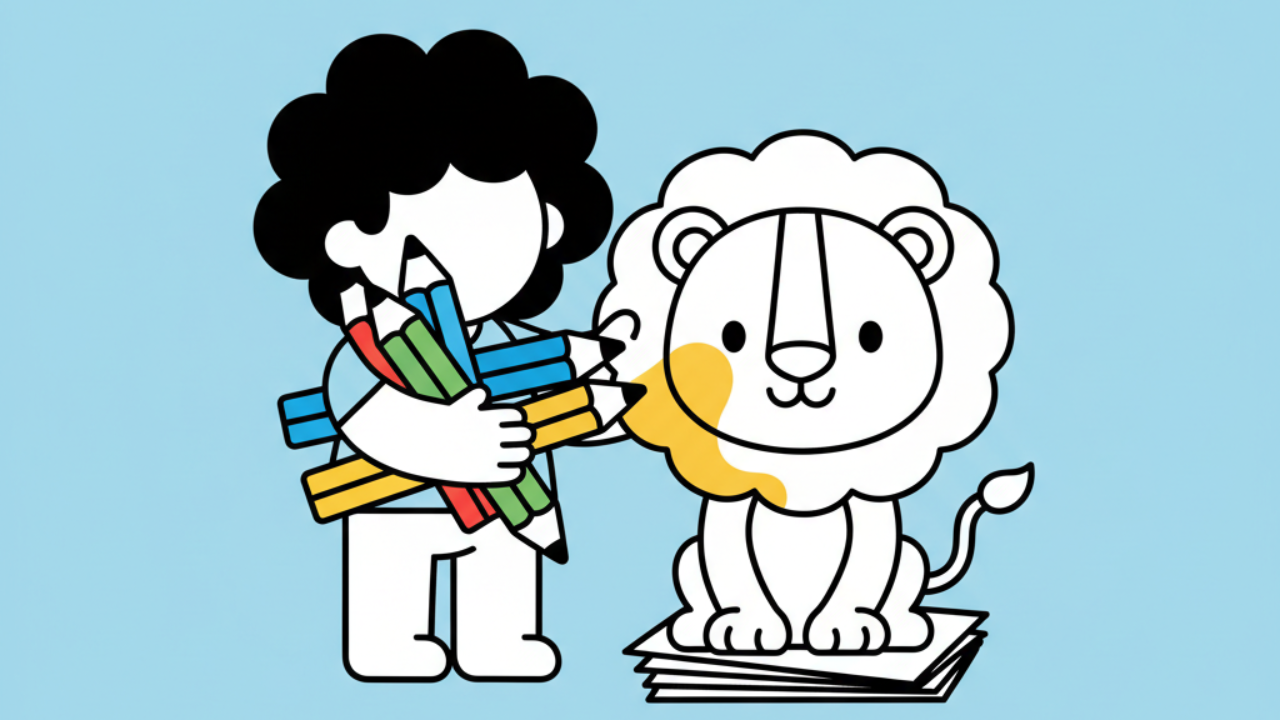
Learn how to color kids' line art with colored pencils at Desenhando e Colorindo. Check out essential tips to bring your free printable pages to life!
The Importance of Preparing Your Coloring Supplies
Before you start bringing your coloring pages to life, the first fundamental step is organizing your space and choosing your tools. Coloring is an activity that requires patience and tools that allow for full creative expression. To get the best results on your printable coloring sheets, make sure your colored pencils are sharp, allowing for precise strokes and smooth fills.
Paper choice also makes a huge difference. When using the Desenhando e Colorindo portal to download your files, we recommend using paper with a slightly higher weight than standard copy paper (like 28lb or 65lb cardstock) if your printer allows. This prevents the pressure of the pencil from marking the back or the paper from tearing during layering. Having a soft eraser and a quality sharpener on hand ensures your creative flow won't be interrupted.
During these times when school activities and family moments call for a creative break, setting up an environment with good lighting is essential. White or natural light helps you identify the true tones of your pencils, preventing you from confusing similar colors like navy blue and dark purple, ensuring your kids' line art looks exactly as planned. ✨
Basic Techniques: Motion and Pencil Pressure
For those looking to master the art of free printables and coloring perfectly, understanding hand pressure is the big secret. Many beginners make the mistake of pressing too hard on the first layer, which saturates the paper and prevents color blending. The ideal way is to start with light, circular motions, creating a uniform base that will support future shades.
The circular motion is superior to the "back and forth" stroke because it eliminates streak marks and provides a velvety texture to the piece. When coloring cute drawings, such as animals or magical characters, this softness is what brings a professional look to the final work. Practice applying gradual layers: it's always easier to darken a color than to try to lighten it once it's applied.
Pro Tip: Try holding the pencil a bit further back from the tip for the initial layers. This naturally reduces hand pressure and helps create a smooth, even background on your printable art.
Creating Gradients and Smooth Transitions
Gradients are the technique that turns a flat drawing into a piece with depth. To do this in your educational coloring pages, pick three shades of the same color (e.g., light blue, medium blue, and dark blue). Start with the lightest color over the whole area, then apply the medium shade from the middle to the end, and finish with the dark color only on the edges or shadow areas.
Layering allows you to create new colors that aren't even in your pencil box. If you're coloring nature line art, try adding a bit of yellow over green for a sun-kissed touch, or a bit of blue over green to create a dense forest shadow. Experimentation is the key to growth in your digital coloring book.
Choosing a Color Palette for Kids' Drawings
Color harmony is what catches the eye and sparks interest for both kids and adults. When selecting coloring activities on the Desenhando e Colorindo site, think about the mood you want to convey. Warm colors like red, orange, and yellow broadcast energy and joy—ideal for daytime scenes and active characters. Cold colors like blue and violet bring calm and are perfect for nighttime or aquatic settings. 🎨
A great strategy for beginners is using the color wheel as a guide. Complementary colors (opposites on the wheel, like blue and orange) create a vibrant contrast that highlights important elements of your online coloring or printed art. For a softer, more relaxing look, use analogous colors, which are those next to each other, like pink, purple, and blue.
- Primary Colors: Red, Blue, and Yellow (the base of everything).
- Secondary Colors: Orange, Green, and Purple (mixes of primaries).
- Tertiary Colors: Mixes between primary and secondary for unique nuances.
- Neutral Colors: Gray, Brown, Black, and White for details and depth.
Light and Shadow: Bringing Line Art to Life
Kids' line art usually has well-defined lines, making it easy to identify where each color goes. However, to go beyond the basics, you should decide where the light source is coming from in your drawing. If the light comes from the top right, all the left sides of objects should have darker colors and cast shadows.
Don't be afraid to use a black or dark brown pencil for the deepest shadows, but use them sparingly. Often, a shadow made with a darker version of the object's own color produces a more natural result. In AI-generated drawings, shapes can be complex, so defining the light helps organize the visual perception of the image. 💡
Using White Pencils and Blenders
Did you know the white colored pencil has an incredible function? It works as a "blender." After applying several layers of color to your free printable coloring pages, rub the white pencil with medium pressure over everything. It will compact the pigments, hide the white pores of the paper, and give the painting a polished, oil-paint-like finish.
There are also specific pencils called colorless blenders that do this without changing the color tones. This technique is excellent for finishing art prints that will be framed or used in school portfolios, giving them a high-quality professional finish.
Organization and Finishing Touches
Keeping your pencils sharp isn't just about looks—it's about control. For tiny details in complex coloring pages, a fine point is indispensable. For filling large background areas, you can tilt the pencil, using the side of the lead to cover more space in less time.
After finishing your piece, a conservation tip is to avoid rubbing your hand over the drawing, as natural skin oils can smudge the pigment. If possible, use a fixative spray (with adult supervision) to ensure the colors stay vibrant for years in your physical coloring book.
- Keep your hands clean throughout the process.
- Use a blank sheet of paper under your hand to avoid smudging what's already painted.
- Rotate the paper as needed to maintain a comfortable painting angle.
- Remember to date your drawing to track your artistic progress! 📅
Frequently Asked Questions
What is the best type of colored pencil for beginners?
For those starting to explore coloring pages, good quality school-grade pencils are enough. Look for pencils with soft leads, as they make it easier to apply color without needing much pressure, which is ideal for kids and those who love layering.
Can I mix colored pencils with other materials?
Yes! Mixed media is very common. You can use markers for vibrant outlines or details and colored pencils for filling and gradients. Just be careful not to use water-based materials (like watercolors) on very thin paper to avoid damaging your kids' line art.
How do I make the color look solid and uniform?
The secret to intense color isn't force, but layering. Apply the same color multiple times, slightly changing the stroke direction with each layer. This fills the paper's pores completely and results in a solid, professional look for your coloring activities.
Where can I find new drawings every day?
At Desenhando e Colorindo, we update our gallery constantly with free printable coloring pages. You can browse by categories, finding everything from cute drawings to complex AI-assisted line art, ensuring fresh fun every time! 🚀
Conclusion
Coloring is a journey of discovery and relaxation that benefits people of all ages. By following this step-by-step guide and using pressure, layering, and lighting techniques, you can transform simple kids' line art into a true piece of personalized art. The most important thing is to have fun and not be afraid to experiment with combinations. Now that you know the best tips for using your colored pencils, how about putting them into practice? Access our vast collection of printable coloring pages at Desenhando e Colorindo, pick your favorites, and start creating a world full of color and imagination right now! 🎨✨
Escrito e revisado por Armando Amaro
Fundador do Desenhando e Colorindo. Todo artigo passa por curadoria e revisão humana antes de ser publicado.