Passo a passo: desenhando um cachorro kawaii fofo e simples
28 de outubro de 2026
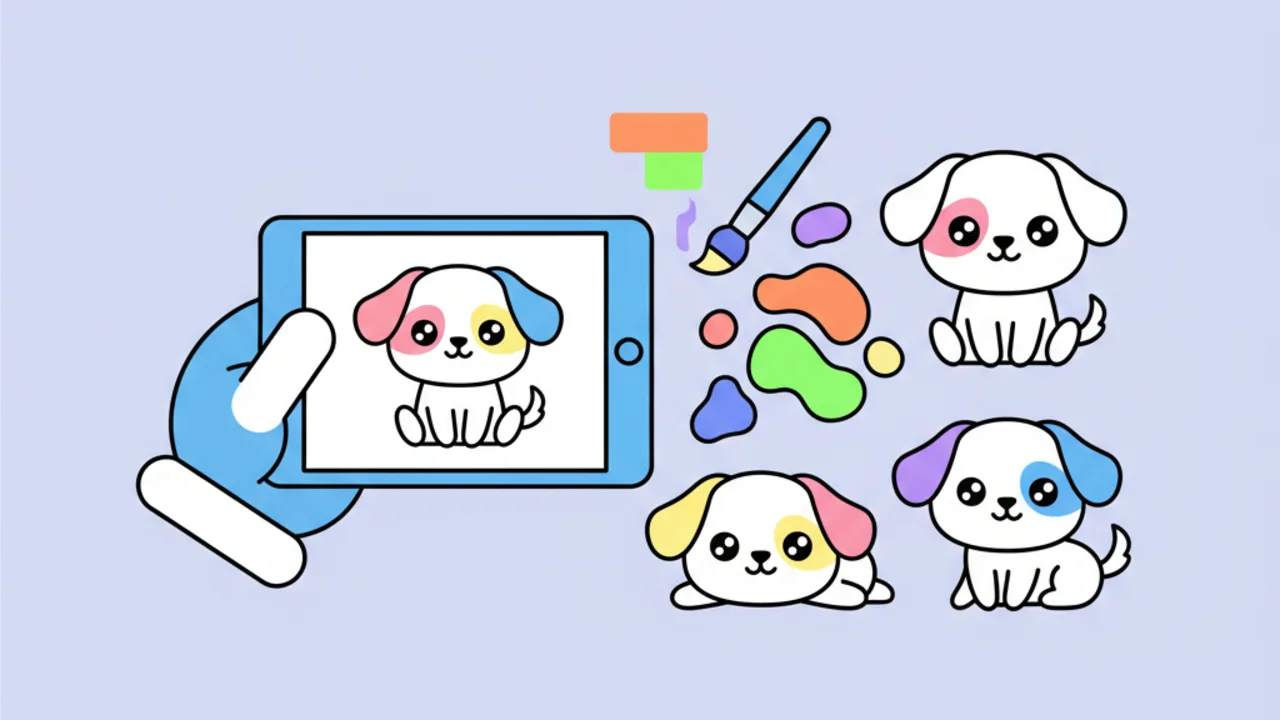
Aprenda como desenhar um cachorro kawaii fofo e simples com nosso guia passo a passo. Prepare seus materiais e crie lindos desenhos para colorir e imprimir!
What Defines the Kawaii Style in Dog Drawings
The kawaii style, originating from Japanese culture, focuses on extreme cuteness. When creating free coloring pages to print with this theme, we use exaggerated proportions, such as large heads and small bodies. The main idea is to generate an immediate emotional response of affection and protection.
To draw a dog in this style, you should focus on rounded shapes. Unlike a realistic drawing, kawaii kid-friendly line art avoids sharp angles and aggressive strokes. Everything should be soft, resembling a plush toy or candy, which makes coloring activities much easier for younger children.
Moreover, the face is the most important part. Large, shiny eyes, positioned lower on the face, give it a puppy-like look. By practicing this method, you improve your spatial perception and pave the way for creating a personalized digital coloring book with your own artwork.
Essential Materials for Your Line Art Practice
Before starting the step-by-step process, it's important to set aside the right tools. Having good materials helps ensure your educational drawings stay sharp, making it easier to digitize them later if you want to offer your own free drawings for download.
- Common printer paper or heavier cardstock (180g) to prevent tearing.
- Graphite pencils (preferably HB or 2B) for light sketches.
- A soft eraser that won't smudge the paper during corrections.
- A black fineliner or marker to finalize the kids' line art.
- Colored pencils, crayons, or markers for the coloring stage.
Remember that at Desenhando e Colorindo, we value creative freedom. If you prefer technology, you can use a tablet to create AI-generated drawings as a base and then manually add the cute details that only a human touch provides.
Step 1: The Basic Head and Body Structure
Start by drawing a large circle for the head. In the kawaii style, the head usually takes up at least half of the character's total height. Don't worry about perfection now; use light strokes that can be erased later. Below the head, draw a smaller and slightly flattened oval to represent the body.
The connection between the head and the body should be almost nonexistent, eliminating the neck. This reinforces the puppy aesthetic. This technique is very common in professional coloring sheets, as it creates an iconic and easily identifiable silhouette. Keep the shapes simple so that coloring for kids remains a pleasant and frustration-free task.
Quick tip: When making the initial sketch, imagine you are drawing a bean or a potato. Organic and imperfect shapes make your dog much more charismatic and unique!
Refining the Initial Strokes
With the basic shapes ready, connect the head to the body with smooth lines. If your dog is a specific breed, like a Corgi or a Pug, you can adjust the shape of the body oval. However, for a generic and cute design, a rounded shape is always the best choice for printable coloring pages.
Step 2: Creating Expressive and Cute Faces
Now let's get to the heart of the kawaii style. Draw two large circles for the eyes. A vital trick is to place them quite far apart from each other. Between the eyes, draw a small inverted triangle for the nose. The mouth can be a small "w" right below the nose, giving it that perpetual smile expression.
For the eyes, leave two small white circles inside the black pupil. This simulates shine and moisture, making the gaze irresistible. This kind of detail adds great value to the coloring drawing, as it allows whoever is painting to use different colors to highlight the little animal's eyes.
Adding the Ears
The ears define the personality. Floppy ears suggest a calmer, more docile dog, while pointy ears indicate alertness and energy. In the kawaii style, even pointy ears should have rounded tips. Draw them at the top of the head, tilted slightly outward to increase the sense of width and cuteness.
Step 3: Simplified Paws and Tail
Paws in the kawaii style don't need detailed toes or claws. Draw four small cylinders or teardrop shapes at the bottom of the body. The front paws can be straight, while the back paws can be slightly hidden if the dog is sitting. This simplicity is what makes cute drawings so popular worldwide.
The tail is the final touch of movement. A short, chubby tail pairs well with smaller breeds, while a long, fluffy tail brings more dynamism. Draw the tail with a gentle curve, coming out from the back of the body. Remember this is line art, so focus on a clear outer contour.
Coloring Tips for Beginners
After finishing the drawing, the fun part begins: coloring for kids and adults! For a kawaii dog, use pastel colors or light shades of brown, cream, and gray. You can add small circular spots across the body to create interesting patterns, like those of a Dalmatian or a Beagle.
- Use light pink to create rosy cheeks just below the eyes.
- Apply light shadows in the areas where the body touches the ground to give it depth.
- Blend analogous colors to create a smooth gradient on the ears or tail.
- Leave white borders if you want a modern sticker effect.
If you are using our free coloring pages to print, try using different techniques on each sheet. Repetition helps reinforce the learning of colors and textures, transforming a simple sheet into an educational work of art.
How to Turn Your Drawing into Study Material
Teachers can use the process of drawing cute animals to teach basic biology and empathy. By creating educational drawings, children connect with the theme in a playful way. Ask students to describe the habitat of the dog they just colored or to make up a story about its breed.
Using printable art in the classroom stimulates fine motor coordination. The act of following the outline with a pen or filling in the spaces without going outside the lines is fundamental in child development. Desenhando e Colorindo offers a vast library to support this creative growth at no cost to the school or family.
Finalizing and Sharing Your Art
After completing your kawaii dog, you can digitize it and share it on social media or blogs. The world of kids' line art is vast, and many people look for new talent. You can even create a series of themed drawings, varying the breeds and accessories like bows, ties, or colorful collars.
Don't forget that practice makes perfect. The month of October, with its mild spring weather in Brazil, is the perfect time to sit outdoors and observe real animals for inspiration, simplifying their shapes into the kawaii style later. The important thing is to keep fun as the absolute priority.
Frequently Asked Questions
How to make the perfect kawaii eye?
The secret is in the highlight. Draw a large circle and color it black, leaving a larger white circle at the top and a smaller one at the bottom. This creates immediate depth and life in your coloring page.
Which colors work best for cute dogs?
Shades of caramel, beige, white, and bluish-gray are safe choices. For a more fantastical touch, pastel colors like lilac and baby blue also look great on playful-style coloring sheets.
Can I draw on regular paper or do I need special paper?
For practice, standard 75g printer paper is enough. If you plan to use watercolors for coloring, we recommend paper with a weight above 200g so your line art doesn't wrinkle.
How do I turn my drawing into a printable file?
You can take a well-lit photo or use a scanner. Then, use an image editor to increase the contrast, making the lines very black and the background very white, ready to be one of our free drawings.
Now that you've mastered the technique of drawing a kawaii dog, take the opportunity to explore our entire collection. Here at Desenhando e Colorindo, we have thousands of options waiting for you. Choose your favorite themes, get your pencils ready, and start creating right now. Don't waste time and go get your printable coloring pages to guarantee hours of entertainment and creativity for the whole family!
Escrito e revisado por Armando Amaro
Fundador do Desenhando e Colorindo. Todo artigo passa por curadoria e revisão humana antes de ser publicado.