Coloring Step-by-Step: Adding Textures to Nature Scenes
28 de setembro de 2026
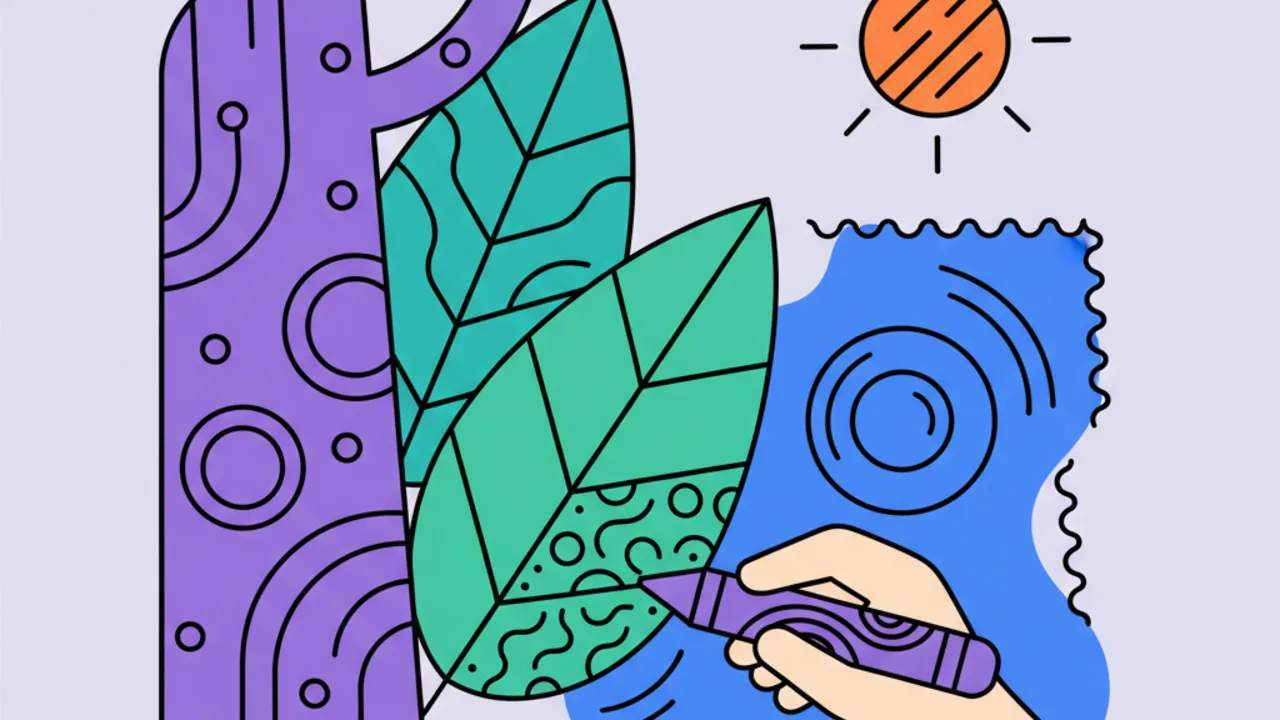
Learn how to create amazing textures on nature coloring pages. Check out our step-by-step guide and bring your free printable drawings to life.
Basic Techniques for Creating Textures in Coloring Pages
Exploring the world of coloring pages goes way beyond just filling in white spaces with solid colors. When we dive into nature themes this September, the diversity of surfaces is huge, requiring techniques that bring depth and realism to your art on paper.
To get started, pick coloring sheets that feature elements like trees, rivers, or mountains. The secret to texture lies in the pressure applied to the colored pencil and the direction of the strokes you make on standard printer paper.
Texture isn't just a visual detail; it's a way to make kids' line art much more engaging and educational. By teaching children to tell the difference between tree bark and a smooth leaf, we are stimulating their tactile and visual perception in a fun and creative way.
How to Simulate Tree Bark in Free Drawings
Tree bark is one of the most challenging elements in coloring activities. To get a realistic result, you shouldn't just use one shade of brown, but a palette that includes ochre, earth tones, and even dark grey.
Use the "cross-hatching" technique to create wood grain. Make small, irregular vertical lines, following the natural growth of the trunk. Then, apply light layers of contrasting colors to create light and shadow effects within the bark's ridges.
Pro tip: To add an extra touch of realism, use a white colored pencil or an embossing tool on the paper before painting. This will create grooves that stay white, simulating tiny light reflections on the rough wood.
Recommended Materials for Texturing
- Watercolor pencils for soft base layers;
- 2B or 4B graphite pencils for deep shadows;
- Kneaded eraser to create highlights in textured areas;
- Paper over 120g (32lb) to handle multiple layers of color.
The Softness of Petals and Foliage in Printable Coloring Pages
Unlike wood, flowers and leaves require a blending technique. In printable coloring pages of gardens, the goal is to convey the lightness and fragility of these natural elements through seamless color transitions.
For petals, start from the center and move toward the edges, applying less pressure as you move away from the core. Using small circular motions helps prevent pencil strokes from showing, resulting in a satin-like texture perfect for lilies and roses.
For leaves, focus on the veins. Often, the line art already includes these lines, but you can enhance them using a darker green or a lemon yellow to indicate spots where the sun hits directly, creating 3D volume.
Water and Stone Effects in Nature Coloring Sheets
Water is a fluid element that depends entirely on reflection. When coloring rivers or lakes in your educational drawings, avoid painting everything a uniform blue. Leave white spaces to represent the water's glint and use shades of cyan, turquoise, and seafoam green.
Rocks, on the other hand, require "stippling" or "tapping" techniques. By using the tip of your pencil to create small dots of different colors, you simulate the porosity of granite or the roughness of volcanic rocks found in mountains.
Combining these two textures—the fluidity of water and the hardness of stone—creates an amazing visual contrast in your cute drawings of landscapes. Remember that practice makes perfect, and every printed page is a new chance to experiment.
Using AI to Create Texture Bases
With technological advances, AI-generated drawings offer much more detailed outlines that make the texturing process easier. These printables often already have shading indicators that help beginners know where to apply more color.
On the Desenhando e Colorindo website, you can find digitally generated options that keep the essence of manual strokes but with the precision only AI provides. This is ideal for those who want to focus solely on coloring techniques without worrying about drawing the structure from scratch.
These models are excellent for digital coloring books, where you can use painting software to test textures before moving to physical paper. Digital versatility helps you understand how colors interact on complex surfaces.
Layering Techniques for Visual Depth
One of the biggest hurdles when coloring for kids or adults is avoiding a "flat" look. Layering is the ultimate solution. Always start with the lightest colors and gradually darken them.
Steps for the Perfect Layer
- Apply a light base layer with circular motions;
- Add a mid-tone to define the main shapes;
- Use dark colors (like black or dark brown) only in the deepest shadow corners;
- Finish with a white pencil or a blender to merge all layers and seal the texture.
Drawing Fur and Feathers on Nature Animals
Nature isn't just plants and rocks. Animals are essential parts, and their textures are unique. To color fur, you should use short, quick strokes, always following the direction the hair would grow on the real animal.
For birds, the secret is overlapping the feathers. Each feather should have its own gradient, usually darker at the base and lighter at the tip. By applying these techniques to the free drawings on our portal, you turn a simple activity into a true work of art.
For younger children, encourage them to use crayons on their side to create thicker textures, which helps develop fine motor skills while they explore the world of printable arts.
Frequently Asked Questions
How do I stop the paper from tearing when doing many layers?
To prevent paper damage, use thicker sheets (like cardstock or 110lb paper) and avoid pressing too hard on the first layers. The secret is patience and building color gradually, keeping your pencil sharp.
What's the best pencil brand for creating textures?
There isn't one single brand, but soft-core (wax-based) pencils are generally better for blending and creating smooth textures. Harder (oil-based) pencils are excellent for fine details and precise ridges on trunks or rocks.
Can I use markers to make nature textures?
Yes, markers are great for stippling on rocks or defining outlines on leaves. However, they don't allow for as many layers as colored pencils, so use them carefully on coloring pages made of standard paper.
How do I make a cloud texture in sky drawings?
For clouds, it's best not to paint the cloud itself, but the sky around it. Use a soft blue and let the white of the paper form the cloud's texture. Use an eraser to lightly soften the edges for that fluffy, "cotton candy" look.
Conclusion
Mastering textures in printable coloring pages is a fun journey that completely transforms your art experience. Whether you're exploring the roughness of a tree or the softness of a petal, every detail adds life and personality to your work. Now that you know these techniques, why not put them into practice? Browse our gallery, pick your favorite nature themes, and start creating right now. Don't forget to print multiple copies to test different color and texture combos in your free drawings!
Escrito e revisado por Armando Amaro
Fundador do Desenhando e Colorindo. Todo artigo passa por curadoria e revisão humana antes de ser publicado.