How to Draw Tropical Fruit: A Step-by-Step Guide
20 de outubro de 2026
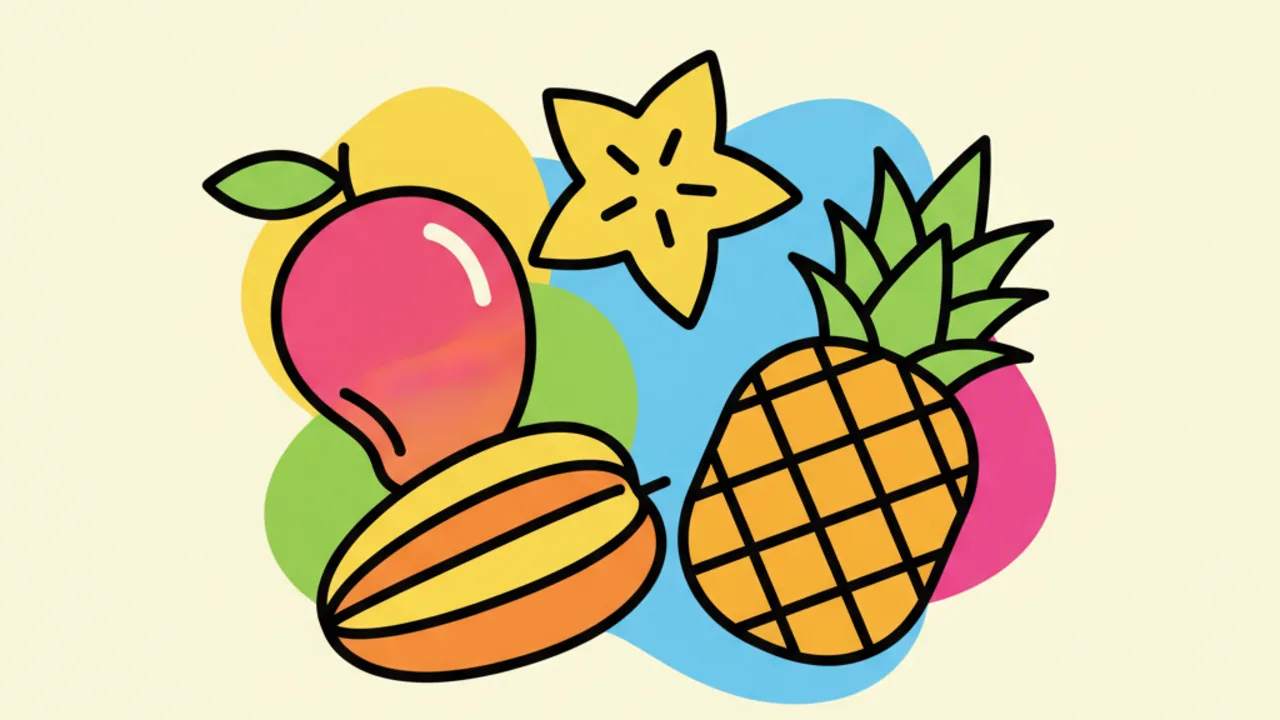
Learn how to draw tropical fruit with our easy guide. Master line art techniques to create fun and educational coloring pages for kids!
Why Practice Tropical Fruit Line Art?
Creating free printable coloring pages focused on tropical fruits is a fantastic way to blend botanical learning with fine motor skill development. In the warmer months, these designs bring a refreshing vibe to school activities and home leisure time. 🎨
The structure of fruits like pineapples, mangoes, and papayas offers interesting geometric challenges for those just starting with coloring for kids. By learning to trace these shapes, both children and adults practice depth and volume perception even before picking up their colors.
Plus, having a digital coloring book focused on healthy eating sparks kids' interest in nutrition. When they draw and color a watermelon or a kiwi, they form a positive connection with these foods, making learning much more organic and fun! 🍎
Essential Supplies for Your Coloring Designs
Before you start sketching your first lines, it's important to get organized. Even if you plan on generating AI coloring pages later, understanding the manual basics helps refine your artistic eye and the prompts you use.
- HB graphite pencils for light sketches.
- Fine-liner black pens for the final line art.
- A soft eraser that won't smudge the paper.
- High-weight paper to handle different types of ink or paint.
- A ruler or compass to help with perfectly round fruits like oranges.
With these items in hand, you're ready to turn a blank sheet into a gallery of vibrant coloring activities, ready to be shared here at Desenhando e Colorindo. ✨
Sketching Techniques: The Base of Tropical Fruits
The secret to cute drawings that still look realistic is simplifying shapes. Tropical fruits are, at their core, modified spheres, ovals, or cylinders. To draw a pineapple, for example, we start with a large oval for the body and pointed shapes for the crown.
For a mango, the movement is more organic—think of a kidney shape or a rounded teardrop. As you practice these outlines, you'll build the confidence needed to create educational drawings that teachers can use as classroom aids. 🏫
Pro Tip: When doing the initial sketch, don't press down hard. Use light, fluid strokes so it's easy to erase the construction lines after you finish the outline with a black pen.
How to Draw a Pineapple with Coloring Texture
The pineapple is one of the most popular free coloring pages because of its unique texture. To draw it, use a pattern of crossed diagonal lines over the oval body. This creates the classic diamond scale pattern of the fruit.
Inside each diamond, you can add a small dot or a tiny curve to represent the skin's texture. This makes the coloring page much richer in detail, challenging the precision of anyone using colored pencils or crayons. 🍍
The crown should be drawn with long, pointed leaves that overlap. Start with the front leaves and add the back ones to create a 3D feel, turning a simple drawing into a true piece of printable art.
Drawing Watermelons and Bananas: Shapes and Curves
Watermelons offer two great coloring activity options: the whole fruit or a slice. The curved triangle slice is iconic. Remember to leave space between the pulp and the rind for the white part, and don't forget to draw the scattered black seeds! 🍉
Bananas, on the other hand, are an excellent exercise in perspective. The long, curved shape requires continuous strokes. You can draw a whole bunch, which increases the entertainment time for kids who love online coloring or traditional paper art.
When creating these free drawings, focus on line clarity. Lines that are too close together can make it hard for younger kids to color, so keep the internal spaces wide and well-defined. 🍌
The Importance of Symmetry in Fruit Line Art
Many tropical fruits, like a passion fruit cut in half or a papaya, have fascinating symmetry. When creating printable coloring pages of these items, try to imagine a center line to ensure both sides stay balanced.
The papaya, with its centered seeds, is a great example of how repetitive patterns can be relaxing. Creating this type of kids' line art helps with concentration and relaxation, working almost like a natural mandala for both adults and little ones. 🧘♂️
Symmetry doesn't have to be perfect—nothing in nature is exact! But keeping a harmonious proportion ensures your educational drawing is easily recognized by anyone visiting the Desenhando e Colorindo portal.
Printing Tips for Your Artwork
After finishing your art or downloading our coloring sheets, print quality makes all the difference. To get the best results and turn your home into an art studio, follow these tips:
- Use the "High Quality" setting on your printer so the line art stays crisp and black.
- If you plan to use watercolors, print on cardstock or paper over 180g.
- For regular colored pencils, 90g paper is ideal and cost-effective.
- Check that the drawing margins aren't being cut off by the printer.
- Create themed folders to organize your coloring pages by fruit type. 📂
By following these steps, you ensure that the coloring activities maintain the integrity of the original strokes, providing a much more satisfying and professional experience.
Exploring Tropical Colors and Shading
While the initial focus is line art, thinking about colors helps define line weight. Tropical fruits are known for vibrant colors like golden yellow, intense orange, and lime green. When creating your free printable drawings, consider leaving "highlight" areas blank.
Shading in coloring designs can be done through hatching—small parallel lines. This gives a shadow texture without needing solid colors, a common technique in coloring books for adults and advanced kids. 🎨
Encourage the little ones to mix colors. A mango, for example, is never just one color; it transitions from green to yellow and red. This type of educational coloring teaches about gradients in a playful, visual way.
Frequently Asked Questions
How do I stop the drawing from smudging when I print?
Make sure the printer ink is completely dry before you start coloring. If you're using an inkjet printer, wait a few minutes, especially if you plan to use markers that might react with the black ink.
Can I use these drawings for school projects?
Absolutely! All our printable coloring pages are ideal for teachers to use in projects about healthy eating, botany, or art. The downloads are free for educational purposes. 🍎
What is the best age to start coloring fruits?
There’s no age limit! Toddlers aged 2 and up can start with cute drawings of large fruits, while adults can enjoy detailed line art to practice shading and relaxation techniques.
How do I turn my hand-drawn art into a digital file?
You can scan your drawing in high resolution or take a well-lit photo. Then, use editing software to bump up the contrast, making the background white and the lines deep black, ready to be a digital coloring page.
Conclusion
Creating and painting free printable tropical fruit coloring pages is an incredible journey through the shapes and colors of nature. Whether you're a parent looking for coloring activities for your kids or an educator seeking classroom materials, Desenhando e Colorindo is your go-to spot. Explore our vast gallery, pick your favorite fruits, and start printing to bring every stroke to life with your creativity! 🌈
Escrito e revisado por Armando Amaro
Fundador do Desenhando e Colorindo. Todo artigo passa por curadoria e revisão humana antes de ser publicado.