Mixing Primary Colors: A Fun Painting Guide for Kids
21 de agosto de 2026
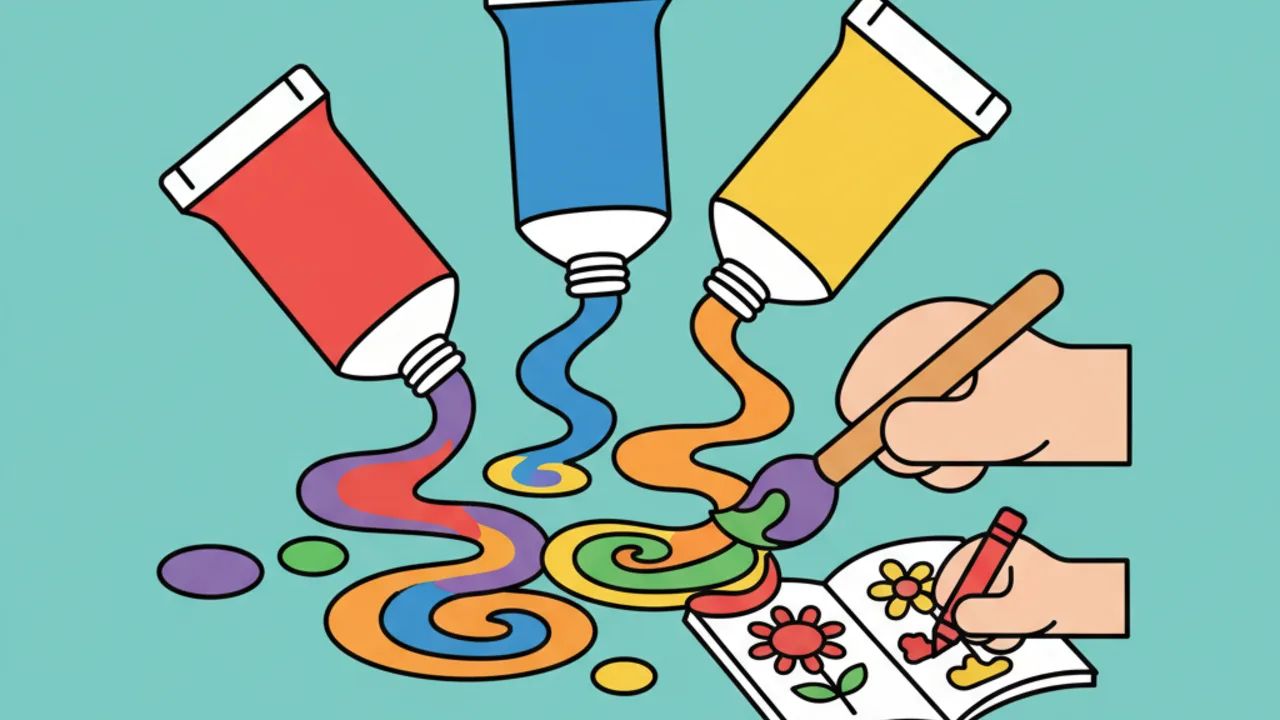
Learn how to mix primary colors in your coloring pages! A practical guide from Desenhando e Colorindo to make kids' art time even more fun. 🎨
The Foundation of Art: What Are Primary Colors for Kids?
When we talk about coloring pages activities, understanding the chromatic base is essential. Primary colors—red, blue, and yellow—are called that because they are pure colors; in other words, they cannot be created by mixing other shades. At Desenhando e Colorindo, we encourage using these colors as a starting point for any kids' line art.
For children who are just starting to explore digital coloring books or printed versions, understanding that these three colors are the "parents" of all others is a fundamental step in their artistic development. By using a free printable coloring page, a child can experiment with applying just red to an apple or blue to an ocean, noticing the intensity of these pure colors.
Being mindful of primary colors in coloring activities helps develop visual perception. When a student receives educational drawings, they start to identify that the yellow of the sun is different from the green of the leaves, but that green only exists because of yellow. This logic stimulates logical reasoning and creativity simultaneously.
Furthermore, by focusing on primary colors, parents and teachers can reduce initial complexity, allowing the child to concentrate on filling the space within the lines. Our collection of coloring pages is optimized with clear outlines specifically to facilitate this motor and chromatic learning from the early years.
How to Create Secondary Colors Using Coloring Sheets
The magic happens when primary colors meet on the paper. In any cute drawing you download here at Desenhando e Colorindo, you can teach color mixing. The concept of secondary colors is the direct result of joining two primary colors in equal parts.
While practicing kids' painting, children discover that Red + Yellow results in Orange. This is one of the most exciting discoveries at the beginning of the artistic journey. Imagine printing a drawing of a fruit basket and using only red and yellow to create the shades of an orange or a peach. Practice makes the learning stick much better than theory alone.
Another classic mix is Blue + Yellow, which creates Green. In nature coloring pages, this technique is very useful. The student can paint lightly with blue and then go over it with yellow to see the color change before their eyes. This turns coloring into a real art-science experiment, increasing engagement with free printable drawings.
Finally, mixing Blue + Red results in Purple or Violet. This combination is perfect for flower drawings or fantasy characters. Encouraging children not to just use a ready-made purple pencil, but to try creating it, is an excellent exercise in patience and pressure control on the paper—essential for handwriting and other fine motor skills.
Painting Tip: For smoother blending, always start with the lighter color (like yellow) and gradually add the darker color (blue or red). This prevents the drawing from getting too dark too quickly and allows for manual adjustments.
Educational Benefits of Mixing Colors on Paper
Using coloring activities goes far beyond entertainment. When we apply the teaching of primary and secondary colors to printable arts, we are working with concepts of optical physics and basic pigment chemistry. For educators, this is a valuable tool to make lessons more dynamic and visual.
Motor coordination is one of the main benefits. When trying to overlap colors in a small space of kids' line art, the child needs to control hand pressure. If they press too hard, the colors won't mix well; if they press too lightly, the secondary color won't show. This balance is what we call tactile control, which is fundamental in childhood.
Additionally, creative autonomy is strengthened. When a child realizes they don't need a 100-color box to create a vibrant drawing, they feel more capable. With just three basic colored pencils, they have the power to create an entire rainbow on their coloring pages. This builds confidence and reduces frustration in the creative process.
- Development of visual acuity and perception of tones.
- Improvement in concentration and focus on detailed tasks.
- Stimulation of experimentation and basic scientific discovery.
- Strengthening self-expression through the choice of unique mixes.
- Reduction of stress and anxiety through art therapy.
Layering Techniques for Online and Paper Coloring
Although the traditional focus is on paper, the online coloring experience also allows for exploring these combinations. However, it is on physical paper where layering truly shines. To get the best result from the coloring pages you download at Desenhando e Colorindo, it is important to teach the thin-layer technique.
Explain to the little ones that painting is like building a brick wall: it must be done layer by layer. Instead of painting hard once, they should stroke the yellow pencil gently, and then the blue gently over it. The result is a much more natural and vibrant green than if they tried to force the pigments to mix all at once.
For those using digital coloring books or tools with artificial intelligence, the concept is similar to using opacity. Many digital art tools allow you to set brush transparency, simulating real paint mixing. This prepares children for a technological future while maintaining classic artistic sensitivity.
If you are using paints (gouache or watercolor) on our drawings, the rules change a bit, but the primary color foundation remains the same. Paint offers an immediate visualization of chromatic transformation, which is fascinating for preschoolers. Always remember to print your drawings on thicker paper if you decide to use wet techniques.
Exploring Creativity with AI-Generated Drawings
An incredible new feature at Desenhando e Colorindo is the integration of AI drawings. This technology allows for generating exclusive line art based on specific descriptions, which opens an infinite range of possibilities for practicing color theory.
You could, for example, ask for a drawing of a "dragon made of crystals." Since crystals reflect many colors, it’s the perfect opportunity to apply primary color knowledge and create colorful reflections. The AI provides the perfect, detailed structure, and the artist (child or adult) provides the soul of the work through colors.
These technologically generated drawings often have details that challenge precision, making them excellent for those who have mastered the basics and want to advance in coloring for kids and adults. The blend of technology and traditional art is what makes our site a reference for anyone looking to print free high-quality and innovative content.
Recommended Materials for Color Mixing
- Watercolor pencils for soft blending with water.
- Soft crayons for quick coverage and intense mixes.
- Standard printer paper or Cardstock (for paints).
- Soft-bristle brushes to avoid tearing the paper during painting.
- High-quality sharpeners to keep a fine point for details.
Tips for Teachers: Lesson Plans with Educational Drawings
Teachers can use our collection of educational drawings to structure entire lessons on color theory. A suggested activity is the "Color Race": give students only blue, red, and yellow pencils and ask them to paint a complex drawing that requires orange, green, and purple. They will have to figure out how to achieve those results on their own.
This approach encourages collaboration. Often, one child discovers that "putting yellow down first" works better and shares this discovery with a peer. The coloring sheet stops being a silent, individual activity and becomes a laboratory for collective discovery.
Another suggestion is working with contrast. Use primary colors to paint the main object of the drawing and secondary colors for the background. This creates a visual hierarchy that helps kids understand composition and focus—concepts that will be useful in various subjects throughout their school life.
Frequently Asked Questions
What are the 3 basic primary colors?
The three traditional primary colors in the pigment model (RYB) are Red, Blue, and Yellow. From these, it is possible to create almost every other color visible in the spectrum.
Can I mix primary colors to make white?
In painting with pigments (pencils, ink), mixing primary colors tends to create dark tones, like brown or dark gray. White is the absence of color on the paper or a specific pigment that cannot be obtained by mixing.
Why is it important to teach primary colors in coloring pages?
It helps with cognitive development, improves visual understanding of the world, and encourages creativity by showing that with few resources, an infinity of artistic results can be created.
How do I print drawings from the Desenhando e Colorindo website?
Simply browse through our categories of free printable coloring pages, choose your favorite image, and click the print or download button. The service is completely free for personal and pedagogical use.
Now that you’ve mastered primary color theory and know how to create amazing shades, it’s time to get hands-on! Browse our galleries, pick your favorite coloring pages, and start experimenting with mixes today. Don’t forget to use the power of our AI to create unique art. Download, print, and let your imagination run wild with Desenhando e Colorindo!
Escrito e revisado por Armando Amaro
Fundador do Desenhando e Colorindo. Todo artigo passa por curadoria e revisão humana antes de ser publicado.