Watercolor for Beginners: Tips to Paint and Color Your Pages
26 de agosto de 2026
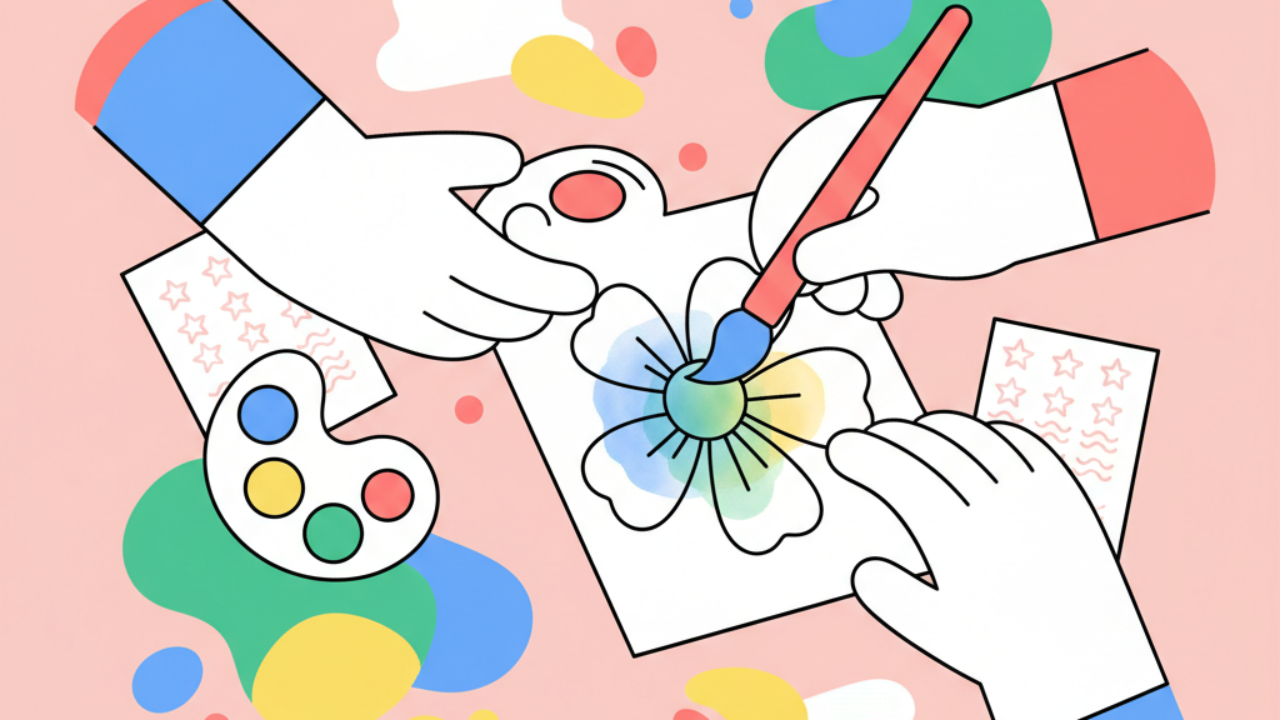
Discover how to master watercolor painting with our beginner's guide. Learn basic techniques to use on your favorite free coloring pages at Desenhando e Colorindo.
Where to start with watercolor: the ideal materials for coloring
The watercolor technique is one of the most fascinating ways to bring your free printable coloring pages to life. For those starting out this season, taking advantage of cozy days for manual activities, the first step is understanding that watercolor depends on transparency. Unlike gouache, it uses water as the primary vehicle for pigments.
To get started, you will need a paint set (pans or tubes), soft-bristle brushes, and most importantly, the right paper. Since Desenhando e Colorindo offers thousands of kids' line art options, we recommend printing your favorite designs on paper with a weight higher than 180g (65lb cover or higher) so the sheet doesn't warp with moisture.
Pro tip: if you don't have professional watercolor paper, try printing your drawing on 240g matte cardstock. It holds water well enough for simple filling techniques.
Besides the paints, always keep two jars of clean water handy: one for cleaning the brush between colors and another to dilute the paint that goes onto the paper. This ensures the colors of your educational drawings stay vibrant and avoid that "muddy" look from excessive mixing.
Types of brushes for beginners
There are several brush shapes, but for those focusing on coloring pages, three types are fundamental. The round brush (size 6 or 8) is the most versatile, working for both large areas and details. The flat brush helps fill backgrounds quickly, while the fine detail brush is essential for the outlines of cute drawings.
Essential techniques: Wet on Dry and Wet on Wet
Mastering watercolor in coloring activities requires understanding how water reacts to paper. The "wet on dry" technique consists of applying wet paint onto dry paper. It is the most common way to color printable arts, as it offers greater control over where the paint goes—perfect for those just starting out.
On the other hand, the "wet on wet" technique involves wetting the drawing area with clean water before applying color. The result is a magical and smooth fusion, perfect for creating skies, seas, or abstract backgrounds in your digital coloring book. This technique stimulates children's creativity as the colors blend themselves on the page, creating unexpected and beautiful effects.
When practicing these techniques on free coloring pages, you'll notice that patience is your greatest ally. Waiting for one layer to dry before applying another on top prevents unwanted smudging, allowing for layers and depth in your online coloring or manual work.
Creating perfect gradients
A gradient is a smooth transition from a dark color to a light one. To do this in your coloring sheets, apply an intense color and then use a brush with just water to "pull" the paint to the side. This creates a professional light and shadow effect, transforming simple line art into a frame-worthy masterpiece.
The importance of transparency when painting cute drawings
The most beloved characteristic of watercolor is its luminosity. Unlike other methods, here the light comes from the white paper itself shining through the layers of paint. When choosing your cute drawings at Desenhando e Colorindo, try not to completely cover the black lines with very thick layers of pigment.
Use water to control intensity. The more water, the lighter the color; the more pigment, the more vibrant. Try this logic on educational drawings of animals or flowers, where the delicacy of the color makes all the difference in the final result. Watercolor allows children to understand opacity concepts in a practical and fun way.
- Light layer: Always start with the lightest colors in your palette.
- Layering: Wait for it to dry and add darker colors to create shadows.
- Breathing room: Leave small white areas of the paper without paint to simulate sunlight.
- Cleanup: If you make a mistake, use a piece of paper towel to "lift" excess water quickly.
How to choose printable drawings ideal for watercolor
Not every drawing works well with watercolor if the lines are too detailed and tiny. For beginners, the ideal is to look for coloring pages with larger fill areas. In our collection, search for categories like fruits, large animals, or simple landscapes. This gives the brush room to work and the water space to flow freely.
The AI-generated drawings available at Desenhando e Colorindo are excellent for this, as you can generate images with cleaner and more defined lines, making it easier to control the paint at the edges. Kids' line art usually has thicker outlines, which helps "hold" the water puddle within the drawing's limits.
Setting up your art space
Before you start painting your coloring pages to print, organize your desk. Keep paper towels nearby—they are your "eraser" in watercolor. If a drop falls where it shouldn't, touching it with a dry paper towel absorbs the paint immediately. Working in a well-lit environment, preferably with natural light, helps you see the true nuances of the colors you are creating.
Tips for advancing in kids' line art painting
Once you feel comfortable with the basics, start experimenting with textures. You can use table salt on wet paint in your coloring sheets to create star or snow effects. Another technique is using an old toothbrush to splatter white or metallic paint over the finished painting, giving a magical touch to your printable art.
Don't be afraid to mix watercolor with other materials. After the painting is completely dry, you can use colored pencils or markers to define tiny details in your educational drawings. This mixed media technique is widely used by professional illustrators and helps give a sharper finish to manual work.
- Use masking tape on the edges of the paper to keep it stretched while it dries.
- Test colors on a separate scrap of paper before applying them to the main drawing.
- Mix primary colors (blue, red, and yellow) to create your own secondary tones.
- Keep your brush movements fluid, without pressing the bristles too hard against the paper.
Frequently Asked Questions
What is the best paper to print drawings for watercolor painting?
Ideally, use paper with a weight above 180g (65lb), such as Canson or heavy cardstock. Standard printer paper (20lb/75g) tends to wrinkle and tear with watercolor moisture, ruining the coloring experience.
Can I use watercolor on online coloring pages?
Online coloring simulates the filling effect, but the real watercolor technique can only be achieved with physical paints on printed drawings. However, our digital tools offer brushes that mimic water transparency for those who prefer using a tablet.
How do I prevent printer ink from smudging with water?
Many inkjet printers use ink that runs with water. A tip is to let the printed drawing dry for 24 hours before painting or use a laser printer, as its toner is moisture-resistant and won't smudge during the painting process.
Can young children learn watercolor?
Absolutely! Watercolor is excellent for motor coordination and visual perception. There are non-toxic pan watercolor options that are perfect for coloring activities with children, being easy to clean and handle.
Conclusion
Painting with watercolor transforms the simple act of coloring into a unique journey of artistic exploration. With the right tips and proper materials, you can turn our free printable coloring pages into truly professional paintings. Remember that practice makes perfect, and the most important thing is to have fun with the creative process. Visit our gallery at Desenhando e Colorindo now, choose your favorite themes, prep your paints, and start creating amazing art today!
Escrito e revisado por Armando Amaro
Fundador do Desenhando e Colorindo. Todo artigo passa por curadoria e revisão humana antes de ser publicado.