Complementary Color Tips for Coloring Cute Pages
28 de setembro de 2026
Learn how to use complementary colors to make your drawings pop! Easy color theory tips for kids and artists at Desenhando e Colorindo. 🎨✨
Understanding the Color Wheel in Coloring Pages
For anyone looking to level up the art of bringing free printable coloring pages to life, understanding color theory is the first step to turning a simple activity into a true masterpiece. The color wheel is the essential tool that helps us visualize how colors relate to one another.
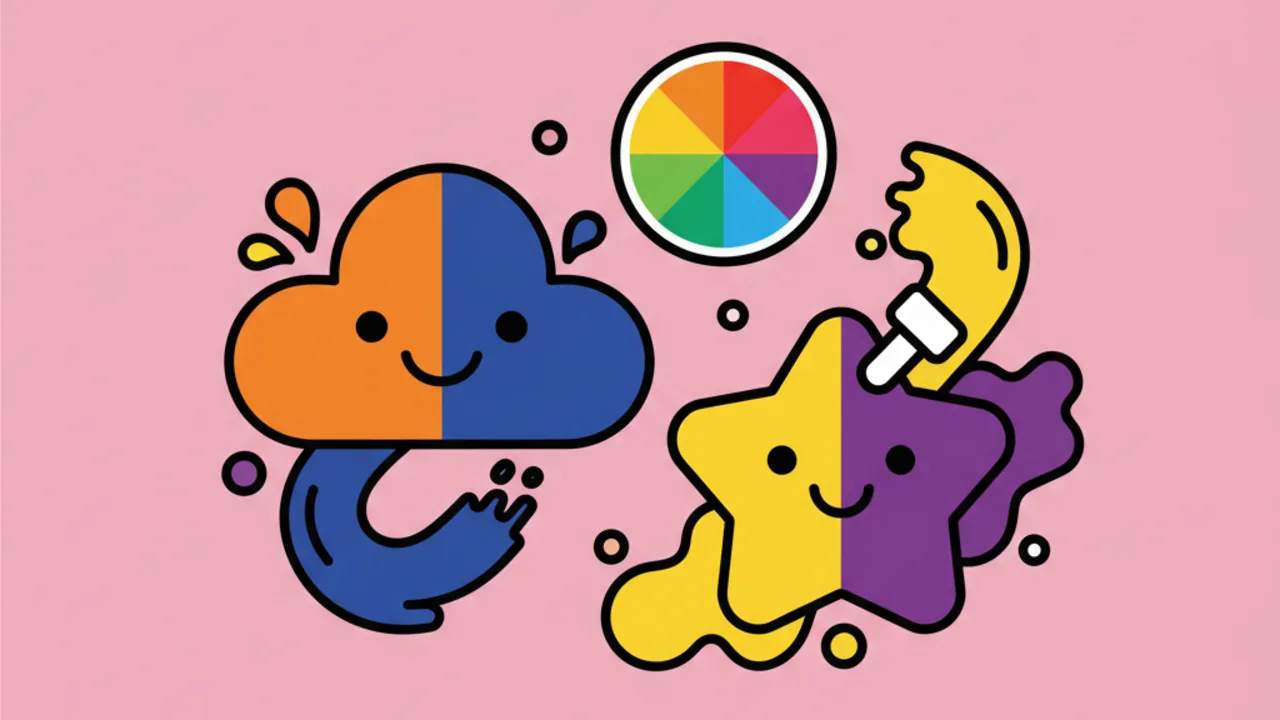
Complementary colors are those located directly opposite each other on this wheel. When placed side-by-side, they create a vibrant contrast that makes the free drawings from Desenhando e Colorindo truly pop. It is the perfect technique for highlighting details in kids' line art.
Pro tip: When coloring a cute character wearing a yellow outfit, try coloring the background or small details with shades of purple to create an immediate and harmonious standout effect.
Why Use Complementary Colors in Coloring Activities?
Using a complementary color scheme in your coloring activities not only improves visual aesthetics but also helps develop children's visual perception. During the changing seasons, we see an explosion of natural tones that make this practice even easier to spot in the real world.
When you download your printable coloring pages, you can experiment with combinations like blue and orange or red and green. These duos generate a visual balance that is naturally pleasing to the human brain, making your digital coloring book much more dynamic.
Additionally, the strategic use of contrast in educational drawings makes it easier to identify different parts of an object or animal, helping with visual literacy and fine motor skills during manual painting.
Top Combinations for Cute Drawings
- Yellow and Purple: Ideal for flowers, stars, and magical characters.
- Blue and Orange: Perfect for beach scenes, little fish, and the sunset sky.
- Red and Green: The classic choice for apples, gardens, and nature elements.
- Cyan and Red-Orange: A modern variation to add an artistic touch to your coloring sheets.
How to Apply Color Theory to AI-Generated Drawings
Nowadays, many of our AI-generated drawings feature intricate details. Complementary color theory helps ensure these details don't get "lost" in a monochromatic painting. By using opposite colors, you define outlines without needing thick black lines.
If you are coloring online, color selection is even more precise. You can use color pickers (hex codes) to find the exact complementary opposite, ensuring your coloring page has a professional finish even when done on a tablet or computer.
Tips for Coloring Complementary Gradients
Try not to just use pure colors. Experiment with transitioning from one color to its complement using pastels. This is especially useful in cute drawings (kawaii style), where highly saturated colors might feel too heavy for the final visual composition.
Educational Impact of Colors in Printable Pages
For teachers and parents, teaching about complementary colors through printable arts is a fun way to introduce concepts of physics (light) and art. It is an activity that stimulates the right side of the brain, responsible for creativity and intuition.
By offering free printable coloring pages with different themes, you encourage children to observe the world around them. Ask them: "What is the opposite color of green grass?" and let them discover the red of the flowers, applying that discovery to the paper.
Painting Techniques for Maximum Contrast
To get the best results on your coloring pages, the application technique matters as much as the choice of tone. If using colored pencils, apply light layers of the first color and, in the shaded areas, lightly overlay the complementary color to create natural depth.
In kids' line art, where fill areas are larger, markers can be a great choice. Just remember to check the paper weight after printing so the ink doesn't bleed through and ruin the fun.
Recommended Coloring Materials
- Watercolor pencils: Excellent for blending complementary colors smoothly.
- Crayons: Great for younger kids to work on contrast in large areas.
- Felt-tip markers: Ideal for highlighting borders with vibrant, opposing colors.
- Gouache paint: Allows for creating new shades and exploring the color wheel hands-on.
Exploring Nature Through Coloring
Take advantage of the changing seasons to download coloring pages that feature fauna and flora. It’s the perfect time to use contrasts of green (foliage) with pink and red tones (flowers), putting theory into practice with elements kids see every day.
Fun and creativity have no limits when we understand how colors work. Whether it’s an animal drawing or a complex landscape, visual harmony brings a sense of satisfaction upon completion, boosting the self-esteem of little artists.
Frequently Asked Questions
What are complementary colors in drawings?
Complementary colors are pairs of colors that sit on opposite sides of the color wheel. They offer the highest possible contrast, which helps highlight important elements in your printable coloring pages.
How do I know which color is complementary to which?
You can use a color wheel chart. The basic combinations are: Red and Green, Blue and Orange, and Yellow and Purple. Using these pairs ensures your coloring sheets look balanced and attractive.
Can I use complementary colors in cute drawings?
Yes! For cute drawings, the secret is to use lighter versions or "candy colors" of these complementary pairs. For example, a soft lilac with a baby yellow creates a delicate and very beautiful contrast.
Where can I find drawings to practice these techniques?
Right here at Desenhando e Colorindo, we offer thousands of free printable coloring pages. Just pick your favorite category, print it out, and start testing your complementary color combos right now!
Conclusion
Mastering the use of complementary colors transforms the painting experience and provides incredible results in any kids' line art or art project. Now that you know how to make your favorite characters stand out and create enchanting contrasts, take advantage of our vast collection. Choose your favorite printable coloring pages at Desenhando e Colorindo, get your pencils ready, and start creating vibrant, lifelike art today!
Escrito e revisado por Armando Amaro
Fundador do Desenhando e Colorindo. Todo artigo passa por curadoria e revisão humana antes de ser publicado.