Sea Animal Coloring Pages: Step-by-Step Drawing Guide
06 de novembro de 2026
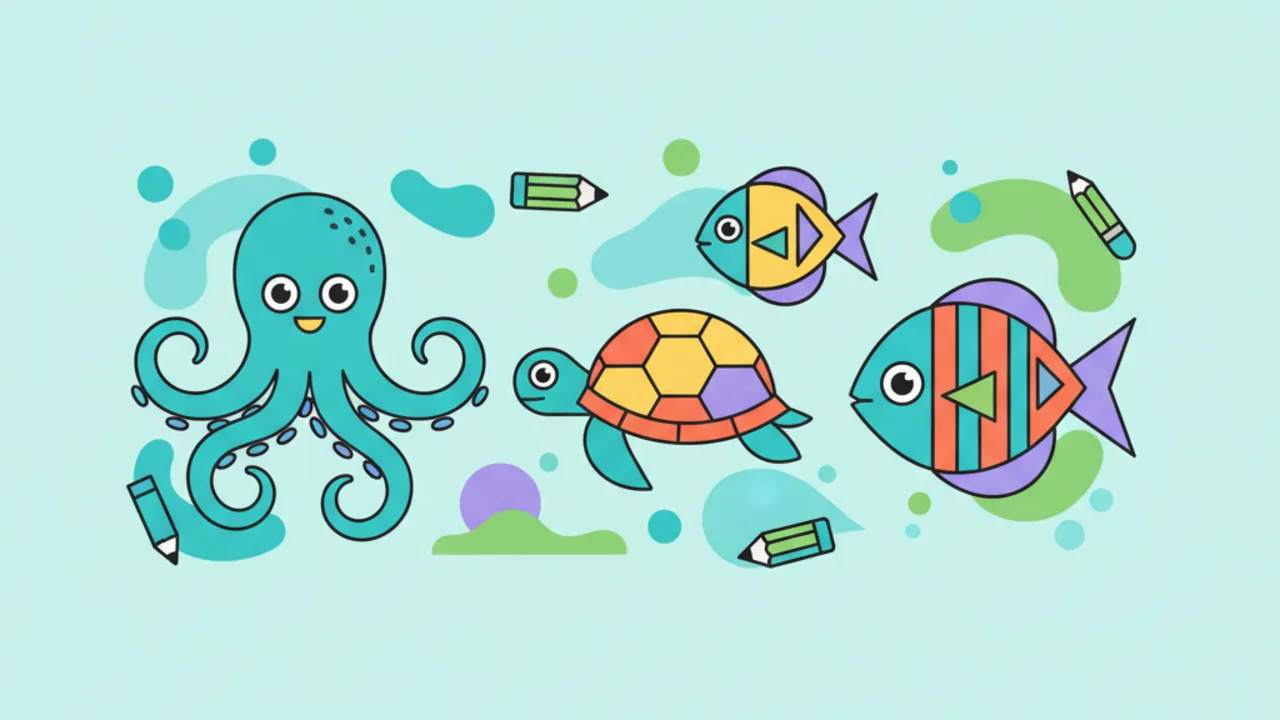
Learn how to draw aquatic animals with our easy step-by-step guide and enjoy dozens of free printable coloring pages. Dive into some deep-sea fun! 🌊
Observation Techniques for Drawing Sea Animals
To start creating your own free printable coloring pages of aquatic life, the secret lies in observing basic geometric shapes. Whether you're cooling off during summer break or looking for a rainy day activity, the deep-sea theme is perfect for educational fun.
Many marine animals have streamlined bodies that can be simplified into drops, ovals, or circles. By learning to see these shapes, you'll be able to create exclusive art for your digital coloring book or physical collection.
Start with light pencil strokes before going over them with a permanent marker. This allows you to adjust the proportions of fins and tails, ensuring your kids' line art looks balanced and fun for the little ones to color later.
How to Draw a Fish Step-by-Step
The fish is the fundamental base for anyone wanting to master marine-themed coloring activities. Begin by drawing a horizontal oval for the body. Think of this shape as the center of your entire aquatic character's composition.
Next, add a triangle at the back to form the tail. For the fins, draw small semi-circles on the top and bottom. Remember to leave space for big eyes, which add that cute drawing touch that kids absolutely love.
Finish the details with simple scales, which can be represented by small 'U' shaped arcs. This detailing makes free coloring and printing pages much more interesting to explore with colored pencils or crayons.
Detailing Scales and Textures
Textures are what differentiate a simple sketch from a professional coloring page. You don't need to draw every single scale; sometimes, just a few groups of marks efficiently suggest the texture.
Play with curved lines to convey movement in the water. At Desenhando e Colorindo, we encourage you to use your creativity to create various species, from the classic clownfish to the exotic anglerfish from the deep.
Drawing Octopuses and Jellyfish
The octopus is one of the most fun coloring subjects because of its tentacles. Start with a large, rounded head, similar to a balloon. From the base of the head, draw eight curved lines extending outward.
For jellyfish, the process is even simpler: draw a half-sphere (like an umbrella) and add thin, wavy lines hanging down. This line art style is excellent for beginners as it doesn't require perfect symmetry, given how flexible these creatures are.
Tentacles offer an incredible opportunity to practice line control. When creating your free drawings, try varying the thickness of the lines to add depth, making the part that connects to the body slightly thicker.
Pro Tip: When coloring your sea animals, try using a gradient technique. Start with a dark blue at the edges of the tentacles and fade to a lighter shade towards the center for a stunning 3D effect!
The Ocean Giant: How to Draw Whales
Whales are favorites in any educational drawing collection. Since they are massive animals, the drawing should convey a sense of weight and serenity. Start with a giant bean shape for the main body.
Add the horizontal tail, which is a signature feature of marine mammals. Unlike fish, whales have tail flukes that lie flat. At the top of the head, don't forget to draw the blowhole, often accompanied by a playful water spout.
These designs are great for printable art in school projects about marine life. They teach animal anatomy while providing relaxing moments through painting and filling in spaces.
Sharks: Turning Fear into Coloring Art
Despite their tough reputation, sharks make excellent printable coloring pages. The main structure is like a torpedo. The dorsal fin—that classic triangle sticking out of the water—is the most recognizable element and should be well-positioned in the middle of the back.
For a friendlier (cartoon) style, draw big eyes and a side smile, showing just a few simplified teeth. This transforms the predator into a cute character for younger kids.
A shark's belly is usually lighter than its back. When preparing your coloring activity, you can keep the dividing line between these two parts distinct, helping the child understand where to change color tones.
Scenery Elements: Coral and Seaweed
A good aquatic coloring sheet needs an engaging background. The ocean floor is rich in details that can be added to fill the page. Corals can be drawn as small bushes with textures made of dots or circles.
- Seaweed: Draw vertical wavy lines rising from the bottom, mimicking the sway of the current.
- Air Bubbles: Small circles of varying sizes floating toward the top of the page add dynamism.
- Shells: Fan shapes or simple spirals on the ocean floor.
- Rocks and Sand: Use small strokes and dots to represent the texture of the seabed.
Adding these elements transforms a simple image into a complete online coloring scene or paper landscape, stimulating visual storytelling as the child paints each detail of the ecosystem.
Benefits of Drawing and Coloring the Sea
Working with aquatic themes in coloring pages brings several cognitive benefits. The predominant use of cool colors, like blue and green, helps calm the mind and reduce stress for both children and adults looking for a creative hobby.
Furthermore, the theme allows for the introduction of marine biology concepts in a lighthearted way. By printing our free drawings, parents and teachers can talk about the importance of ocean conservation and the role each animal plays in nature.
The Desenhando e Colorindo website offers a wide range of kids' line art options that can be downloaded instantly. The act of following lines to paint helps with fine motor skills, preparing little ones for writing and other manual tasks.
Recommended Materials for Coloring Sea Life
To get the best results from your coloring and printing pages, the choice of material makes all the difference. While colored pencils are the most common, the undersea world works great with other experimental techniques.
- Watercolors: Ideal for creating smooth, quick blue backgrounds.
- Markers: Great for outlining line art and making main characters pop.
- Crayons: Excellent for filling large areas like a whale's body or the deep ocean.
- Watercolor Pencils: Allow for precise details that can be blended with a damp brush later.
Regardless of the material, the most important thing is the fun. Our AI-enhanced and hand-drawn designs are optimized for any type of standard home printer paper.
Frequently Asked Questions
How do I save the drawings to my computer?
Just right-click on the chosen image and select 'Save image as'. Then, open the file and send it to your printer to start the fun with our free printable coloring pages.
Are the drawings on the site really free?
Yes! All drawings provided at Desenhando e Colorindo are completely free for personal, educational, and recreational use. We want to encourage art and creativity in every home.
Can I color the drawings directly on a tablet or phone?
Absolutely. You can download the image and use digital painting apps to practice online coloring. Our files are high-resolution, ensuring the lines stay sharp even on digital screens.
What is the best age to start using these coloring activities?
Our coloring pages cater to everyone from toddlers, with simpler and broader shapes, to adults who prefer more detailed and complex art. There are options for all skill levels.
Now that you know how to create and detail your own sea creatures, how about getting to work? Browse our collection, pick your favorite themes, and get your pencils ready. Desenhando e Colorindo is your dedicated space for family art and fun. Enjoy our printable coloring pages and turn your day into a burst of color and creativity!
Escrito e revisado por Armando Amaro
Fundador do Desenhando e Colorindo. Todo artigo passa por curadoria e revisão humana antes de ser publicado.