How to Draw Butterflies: Easy Step-by-Step Drawing Guide
26 de outubro de 2026
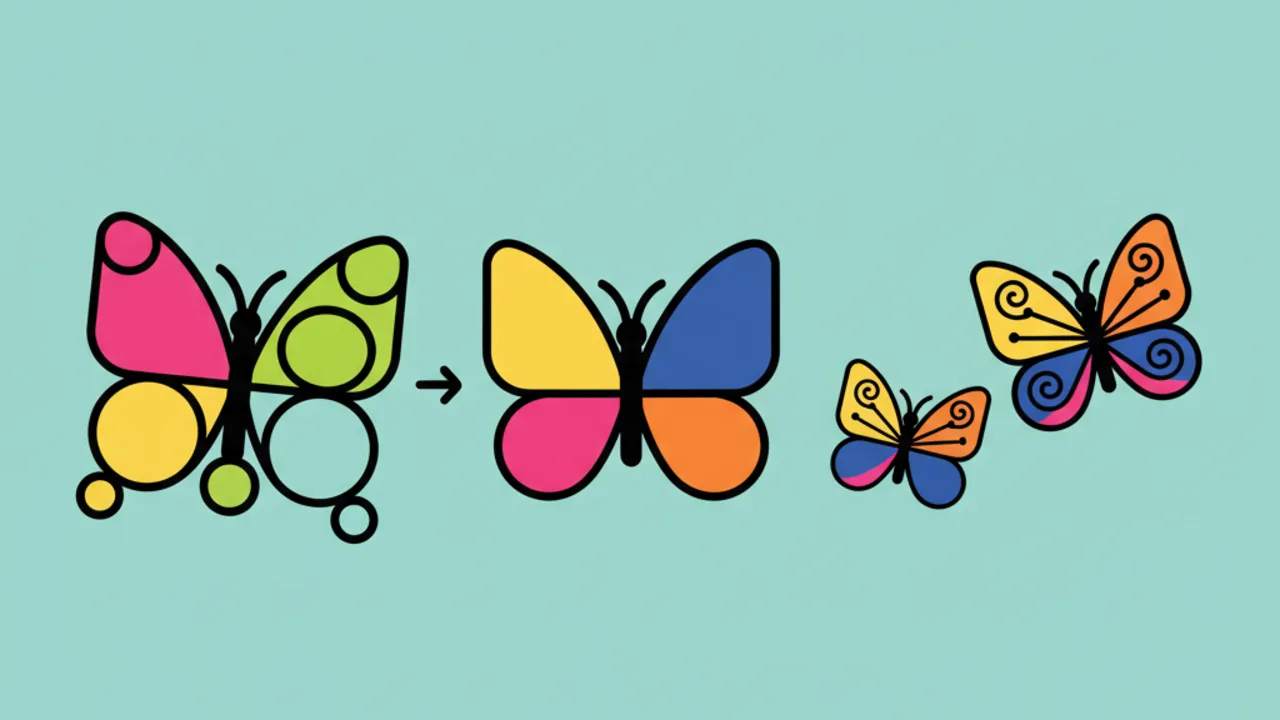
Learn how to draw beautiful butterflies with our easy step-by-step guide. Turn simple lines into amazing coloring pages here at Drawing & Coloring! 🦋
Understanding Basic Anatomy to Draw Butterflies
To learn how to draw butterflies that look realistic or stylized, the first step is understanding the basic structure of these fascinating insects. Butterflies are made of three main parts: the head, thorax, and abdomen. When creating your coloring pages to print, start by sketching three connected oval shapes to represent these body parts.
The head should be the smallest part, followed by the thorax (where the wings attach) and a longer abdomen. On top of the head, don't forget to add the antennae, which can be straight or slightly curved. This structure serves as the skeleton for any kids' line art you want to create, ensuring the drawing has harmonious proportions before moving on to the fun part: the wings.
Mastering this foundation is essential for anyone looking for coloring activities that help develop visual perception. When children understand how the animal's body is formed, the task of coloring becomes much more intuitive and educational, turning a blank sheet of paper into a real artistic biology lesson. 🦋
The Secret of Symmetry in Wings
One of the biggest challenges when researching how to draw butterflies is keeping symmetry between the left and right wings. Butterfly wings are like mirrors. If you draw a circular pattern on one side, it should appear in exactly the same position on the other side. This creates a visual balance that is very appealing in printable coloring sheets.
To make it easier, imagine an invisible vertical line running through the center of the butterfly's body. Start by drawing the upper wing (the forewing), which is usually larger and more triangular. Then, draw the lower wing (the hindwing), which is generally more rounded. Repeat the process on the other side, trying to maintain the same size and curvature.
Pro Tip: If you are creating a manual sketch to later turn into free coloring pages, fold the paper in half after drawing one side and use the transparency against a light source to trace the other side identically.
Types of Wing Shapes to Vary Your Drawings
There are thousands of butterfly species, which means you have total freedom to create varied shapes. Some have pointed wings, while others have wavy edges or elongated "tails," like the famous swallowtail butterfly.
- Rounded Wings: Perfect for cute and kid-friendly drawings, conveying softness.
- Geometric Wings: Great for those who like modern styles or AI-generated designs.
- Scalloped Wings: Create a complex visual effect, ideal for adults looking for a more challenging digital coloring book.
- Elongated Wings: Give the impression of speed and lightness to the drawing.
Adding Patterns and Internal Details
Once the wing outlines are set, it's time to fill the interior with details that make the coloring page interesting. Butterflies are known for their vibrant colors, but before the color, we need the lines. Create veins starting from the center of the thorax toward the wing edges.
In addition to veins, you can add circles (called eyespots), spots, stripes, and geometric patterns. These elements not only beautify the drawing but also offer different areas for kids or adults to practice motor coordination when using colored pencils or crayons. At Desenhando e Colorindo, we value drawings that stimulate creativity through minute details.
If you're creating an educational drawing, you can research photos of real species, like the Monarch, to replicate its iconic black and orange patterns. This turns art time into a learning experience about nature and environmental preservation, recurring themes in our printable art.
Tracing Techniques for a Professional Finish
For your guide on how to draw butterflies to result in high-quality material, line weight is fundamental. In coloring pages for kids, we recommend using thicker lines for the outer contour and thinner lines for the internal details and wing veins.
If you draw digitally, use separate layers for the sketch and the final art. This allows you to clean up construction lines (the initial body circles) without erasing the main drawing. The result will be clean line art, ready to be downloaded and painted by thousands of users visiting our site for free fun.
Keeping a steady stroke helps a lot when using fill tools in online coloring software. Make sure there are no small gaps in the lines, so the color doesn't "leak" into the background, ensuring a perfect user experience. ✨
Integrating the Butterfly into the Scenery
A butterfly is rarely alone in the air in a complete drawing. To make your project on how to draw butterflies more engaging, add elements from their natural habitat. Flowers like daisies, sunflowers, and lavender are perfect complements for a garden or spring-themed coloring book.
You can also include leaves with small dewdrops, other smaller insects, or a soft background with clouds and the sun. This transforms a simple isolated drawing into a full nature coloring scene. When planning the composition, place the butterfly in a focal point, perhaps resting lightly on a petal or flying gracefully in the center of the page.
Printing Tip: When printing your free drawings, prefer higher weight paper (like 120g or 180g) if you plan to use markers or watercolors, preventing the ink from bleeding through the sheet.
Educational Benefits of Drawing and Coloring Butterflies
Teaching kids how to draw butterflies goes far beyond aesthetics. This activity works on laterality, spatial awareness, and patience. By following a step-by-step tutorial, children learn to break down a complex task into simple, manageable steps—a valuable skill for their entire school life.
Furthermore, the butterfly theme is ideal for discussing metamorphosis. Teachers can use our educational drawings to illustrate the life cycle from caterpillar to cocoon and the hatching of the butterfly. It's the perfect union between science and art, available for free download on our coloring activities portal. 🎨
- Fine Motor Skill Development: Painting small wing details strengthens hand muscles.
- Emotional Expression: The choice of colors allows the child to express their mood and personality.
- Focus and Concentration: Coloring repetitive patterns helps calm the mind and reduce stress.
- Biological Knowledge: Identifying different types of butterflies expands vocabulary and general knowledge.
Exploring Styles: From Kawaii to Realism
There isn't just one correct way of how to draw butterflies. In the kawaii (cute) style, butterflies get big eyes, rosy cheeks, and extremely simplified, rounded shapes. In the realistic style, the focus is on the texture of the wing scales and the precision of the wing veins. We offer both styles in our collection of cute drawings and complex patterns.
You can also experiment with the Zentangle style, filling the butterfly wings with abstract patterns, mandalas, and repetitive lines. This style is highly sought after by adults who use painting as a relaxing therapy. Regardless of your skill level, the important thing is the creative journey and the pleasure of seeing a blank sheet come to life.
With technology advancing, AI-generated drawings are also becoming popular, creating unique patterns that challenge our imagination. At Desenhando e Colorindo, we blend traditional art with new trends to offer the best coloring pages content on the web.
Frequently Asked Questions
What is the best age to start drawing butterflies?
Children from age 3 can already start doodling basic shapes that resemble butterflies. With time and practice on how to draw butterflies, they will refine their stroke and add more details as their motor coordination evolves.
Can I use crayons to color the wing details?
Yes! Crayons are great for filling in larger areas. For small details and veins, we recommend using fine-tip colored pencils or felt-tip pens to ensure the coloring drawing lines remain visible.
How do I make the butterfly look like it's flying?
To give movement, draw the butterfly slightly tilted and add small curved lines behind the wings to indicate flapping. Another technique is to draw the upper wings more open and the lower wings slightly overlapping, creating a perspective effect.
Where can I find more butterfly drawings to print?
You can find a vast gallery of free printable coloring pages right here on the Desenhando e Colorindo website. We have exclusive categories for animals, insects, and gardens, all ready to download with just one click.
Now that you've mastered the techniques of how to draw butterflies and know all the secrets to creating symmetrical wings and enchanting patterns, it's time to get to work! Grab your pencils, prep your printer, and explore our entire collection of coloring pages to print. Turn your free time into a moment of pure art and fun with the best coloring activities from Desenhando e Colorindo! 🌸
Escrito e revisado por Armando Amaro
Fundador do Desenhando e Colorindo. Todo artigo passa por curadoria e revisão humana antes de ser publicado.