How to Draw a Realistic Train: Drawing and Painting Tips
20 de outubro de 2026
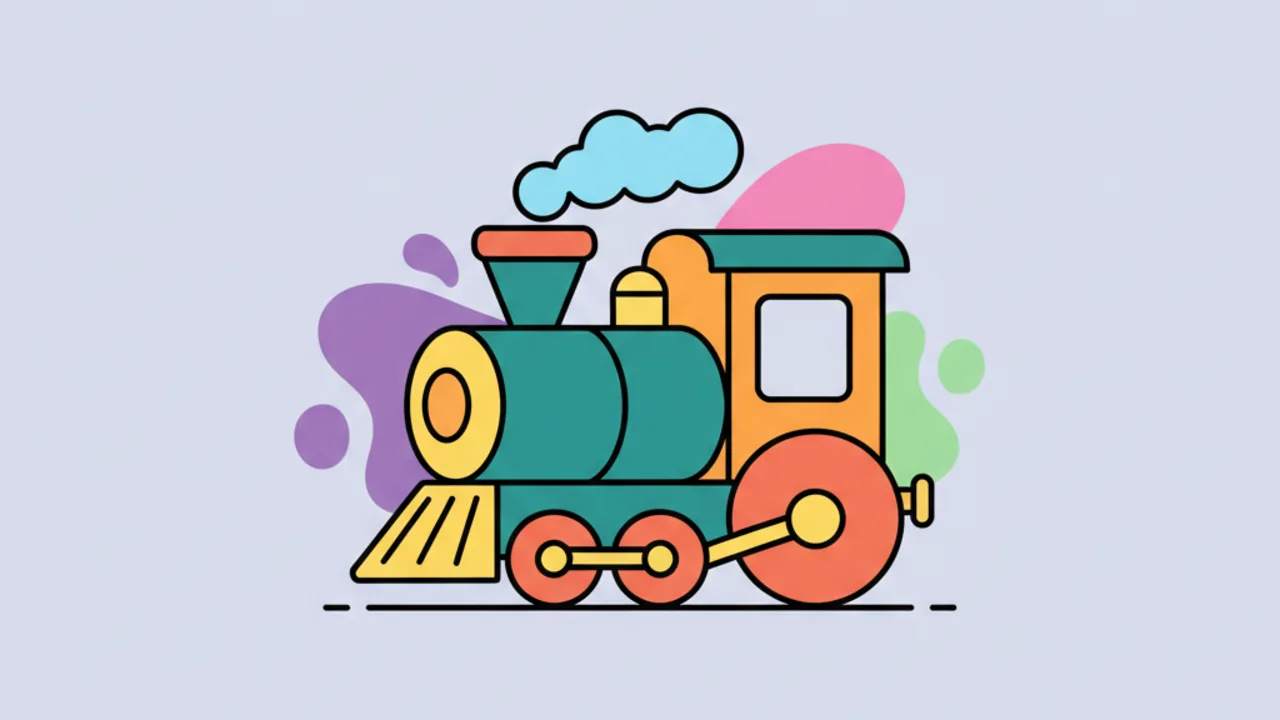
Learn how to draw a realistic train step-by-step! Check out line art tips and painting techniques to create amazing, detailed coloring pages. 🚂✨
Mastering the art of creating coloring pages to print requires patience, especially when the subject involves complex machinery. Crafting the basic structure of a locomotive is the first step in developing high-quality line art for kids or even detailed drawings for adults. In this guide, we'll explore how to transform simple geometric shapes into a realistic train that looks ready to roll off the tracks.
Understanding locomotive anatomy for your line art
To create coloring drawings that are visually appealing, you need to understand that a train is composed of several blocks. Start by visualizing the locomotive as a set of rectangles and cylinders. The front part, where the engine is located, is usually a long horizontal cylinder, while the driver's cab is a cube or vertical rectangle positioned just behind it.
By drawing these shapes, you establish the correct perspective. Remember that in realistic-style coloring pages, depth is essential. Use light vanishing lines to ensure that the wheels and cars decrease in size as they move further away on the horizon of your digital coloring book.
Pro Tip: Always start with very light strokes using an H or 2H pencil. This makes it easier to erase construction lines before finalizing the definitive line art for printing.
The chassis and the wheel base
The chassis is the backbone of the train. Draw a long straight line at the base to serve as a guide. The wheels of a realistic train aren't perfect circles if viewed from an angle; they become ellipses. Make sure to add the flange detail—the part of the wheel that fits onto the rail—ensuring your educational drawing is technically correct.
Detailing the Boiler and the Cab
The boiler is the central element of classic steam trains, a favorite theme in coloring activities. Add metal rings around the boiler cylinder to give it a realistic texture. These details create interesting areas for those who enjoy using different shades of gray and metallic tones when coloring for kids or adults.
In the cab, add small windows and doors. If you are using AI-generated drawings as a base, check if the window proportions would allow a fictional operator to see the track. Details like rivets around the metal plates elevate the level of your free printable coloring pages, turning them into true technical works of art.
Smokestacks and Steam Domes
No steam train is complete without its smokestack. Position it at the front of the boiler. Behind it, add the steam domes, which look like small cupolas on top of the train. These elements add unique silhouettes that make printable art much more interesting and fun to paint.
How to draw tracks with realistic perspective
The tracks are fundamental to situating the train in space. Instead of just two parallel lines, think in three dimensions. The ties (the pieces of wood or concrete that hold the rails) must follow the same perspective as the train. The further away from the observer, the closer and smaller the ties should appear.
- Use a ruler to keep the rail lines perfectly straight.
- Add small stones (the ballast) around the ties to provide texture.
- Draw the spikes or clips that fasten the rail to the ties for a professional touch.
- Create light shadows under the rails to separate the object from the ground.
Painting and shading techniques for trains
After finishing your realistic or kids' line art, painting is what brings the metal to life. Since trains are usually made of steel or iron, using gradients is essential. When using coloring pages to print, encourage the use of colors like navy blue, burgundy, black, and forest green, which were common on historical locomotives.
To simulate the shine of the metal, leave small areas white or use lighter colors where light would hit the top of the boiler cylinder directly. This creates an instant 3D effect, ideal for those practicing online coloring or using traditional colored pencils.
Simulating smoke and motion
Smoke billowing from the stack adds dynamism. Don't draw smoke as solid clouds; use light circular motions and keep the edges soft. In cute train drawings, smoke can be stylized as little balls, but in a realistic drawing, it should look fluid and dispersed by the wind.
Adding the scenery around the locomotive
A train by itself can look out of place. To enrich your coloring pages, add background elements that help tell a story. Mountains in the distance, a classic train station, or even a dense forest in October (taking advantage of the spring/autumn vibes) can transform a simple drawing into a complete landscape.
- Draw telegraph poles parallel to the railway line.
- Include a boarding platform with wooden details.
- Add low vegetation growing between the old tracks.
- Create clouds in the sky that follow the direction of the train's smoke.
Printing Tip: When printing your free drawings at Desenhando e Colorindo, prefer 120g weight paper or higher if you plan to use markers or watercolors, to prevent the ink from bleeding through the sheet.
Types of trains to practice drawing
There are many types of trains you can explore in your coloring activities. From modern bullet trains (Maglev) with their aerodynamic and futuristic lines, to diesel locomotives from the 50s, each offers a different challenge for the artist.
Freight trains, for example, allow you to draw several different cars: cylindrical tank cars, flatcars with colorful containers, and gondola cars loaded with coal. This variety is excellent for creating a diverse and educational digital coloring book for children.
Focus on mechanical details: Rods and pistons
What truly defines a realistic train are the external moving parts. The side rods (the metal bars connecting the wheels) must be drawn with precision. Study how they connect to the center of the wheels. Drawing these parts is an excellent exercise in applied geometry, making the educational drawing even more valuable for spatial perception development.
Frequently Asked Questions
How do I make the train look like it's going fast?
To create a sense of speed in coloring pages, you can slightly tilt the locomotive forward and draw horizontal motion lines coming off the back of the cars and wheels. The smoke should also be drawn leaning sharply backward.
What is the best color for a classic locomotive?
Historically, many locomotives were painted black to hide coal soot, but with accents in gold, brass, or bright red. Try dark and metallic tones for a more realistic result in your line art.
How do I draw the train windows correctly?
Windows must follow the perspective lines of the cab. If the train is at an angle, the further window will appear narrower than the closer one. Add a small inverted 'V' shaped reflection to simulate glass.
Can I use markers on these printable coloring pages?
Yes! Markers are great for the vibrant areas of a train. However, for the brushed metal effect or soft shadows on the boiler, colored pencils or crayons usually offer superior gradient control.
Conclusion
Drawing and painting realistic trains is an activity that blends technique, history, and creativity. Whether you are a parent looking for free printable coloring pages for your kids or an art enthusiast looking to perfect your kids' line art, Desenhando e Colorindo has everything you need. Now that you know the fundamental tips, how about putting them into practice? Browse our transportation category, pick your favorite model, and start coloring today to bring these incredible machines to life!
Escrito e revisado por Armando Amaro
Fundador do Desenhando e Colorindo. Todo artigo passa por curadoria e revisão humana antes de ser publicado.