How to Draw Realistic Fish and Cute Sharks for Kids
26 de outubro de 2026
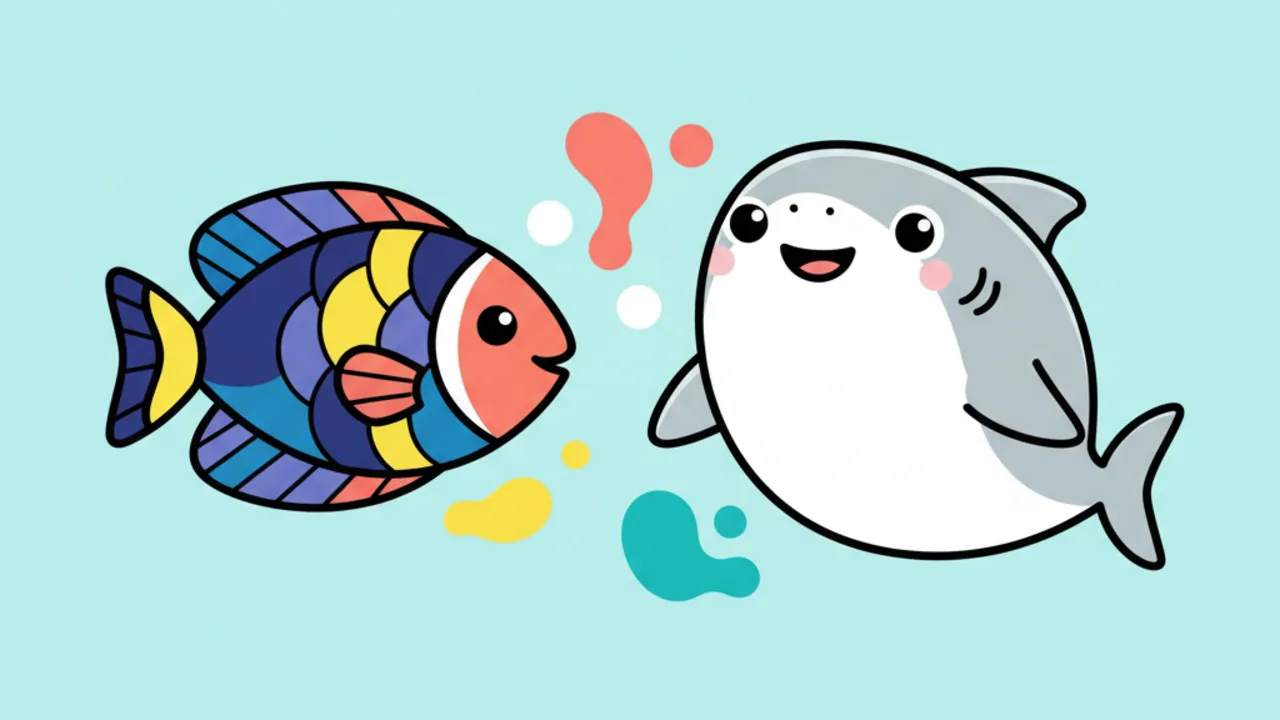
Learn how to draw realistic fish and cute sharks with our easy guides. Download free coloring pages to print at Drawing and Coloring!
Exploring the underwater world through art is one of the most relaxing and educational activities for kids and adults alike. In this complete guide from Drawing & Coloring, we're diving deep into marine anatomy to transform simple strokes into detailed fish and sharks overflowing with personality. If you're looking for free coloring pages to print, you've come to the right place to flex those creative muscles. 🌊
The basic anatomy for drawing realistic fish
To create a lifelike representation, the first step is understanding the hydrodynamic shape of aquatic animals. Most fish have an elliptical or teardrop-shaped body, which makes moving through water easy. When starting your sketch, focus on the centerline that defines the body's curve.
Fins are essential components for realism. The dorsal fin, located on top, helps with stability, while the caudal fin (the tail) is the motor for movement. When drawing scales, avoid detailing every single one; instead, create light textures with hatching to give the sensation of shimmer and reflection under sunlight filtered by the ocean.
Pro tip: For a realistic effect, use colored pencils in varying shades of blue and silver to simulate the reflection of scales underwater, leaving small white areas for highlights.
The secret of gills and eyes
Unlike humans, fish don't have eyelids. For a realistic look, draw circular eyes with a well-defined pupil. The gills should be represented by soft lines just behind the head, following the body's curvature. These details make all the difference when you're preparing your custom coloring sheets.
How to create cute cartoon-style sharks
Not every predator needs to look scary! The "kawaii" or cute style is perfect for children's line art. To draw a friendly shark, start by softening those angular lines. Instead of a pointy snout and sharp teeth, use rounded shapes and big, expressive eyes. 👀
The smile is the main point here. Draw a wide, curvy mouth, perhaps with just one or two triangular teeth peeking out playfully. This removes the threatening look and turns the shark into an adorable character for coloring activities at school or at home.
Exaggerated proportions for extra cuteness
In character design, proportions are your best friends. A cute shark usually has a larger head relative to its body. The side fins can be drawn like short arms, giving the marine animal more humanity. This makes the coloring page much more appealing to little ones.
Recommended materials for coloring marine art
To get the best results on our educational drawings, choosing the right materials is key. Since vibrant colors are always in style for the ocean, try using bright blends and watercolor techniques.
- Watercolor pencils: Perfect for creating that watery gradient effect.
- Fine-liner pens: Ideal for outlining line art and making details pop.
- Crayons: Great for filling in large areas like the seafloor in free drawings.
- 70lb (120g) Paper: Prevents marker ink from bleeding through the paper while painting.
Step-by-Step: Drawing a realistic tropical fish
Let's get to work! Follow these steps to create a fish that looks like it swam right off a coral reef. Remember, you can find variations of these templates in our printable art section.
Step 1: The initial outline
Draw an oval circle. Add a triangle at the back to form the base of the tail. This simple structure is the skeleton of almost all tropical fish.
Step 2: Defining the fins
Add the dorsal fin on top and the pectoral fins on the sides. In realistic fish, these structures usually have visible rays (thin lines that support the fin membrane).
Step 3: Texturing and final details
Draw the fish's lateral line, a sensory organ that runs along the body. Add small shadows under the fins to give depth. If you're using our digital coloring book, you can experiment with different digital color layers.
Turning your drawings into educational activities
Drawing and coloring fish isn't just fun; it's also a great way to learn. Teachers can use printable coloring pages to teach about marine ecosystems, environmental preservation, and species diversity. 🐠
- Species Identification: Name the parts of the fish while the child colors.
- Color Mixing: Teach how blue and yellow create shades of green for seaweed.
- Motor Skills: Following the lines of cute drawings helps with writing development.
- Focus and Concentration: Coloring small areas requires attention, making it a great therapy for adults.
Technical tip: When printing your drawings, make sure your printer setting is on "High Quality" so the kids' line art stays crisp and clear for coloring.
Exploring colors in the deep blue
The ocean isn't just blue. When working on coloring for kids, encourage the use of neon colors and pastels. Coral reefs are full of intense pinks, oranges, and purples. For sharks, while gray is the standard, shades of metallic blue or even lilac can give it a unique artistic touch. ✨
You can also add extra elements around your fish or shark, like air bubbles, corals, starfish, and shipwrecks. This creates a complete scene on your coloring page, turning a simple drawing into a full masterpiece.
Technology helping art: AI Drawings
Nowadays, the use of AI-generated drawings allows for the creation of complex patterns and incredible marine mandalas. At Drawing & Coloring, we integrate the best technology to offer precise and symmetrical outlines, making life easier for those who like to color online or prefer traditional paper.
Advantages of digital line art
Digital precision ensures that lines don't get blurry when printed. This is especially important for realistic fish drawings, where scales and eye details need to be well-defined so the artist can work on light and shadow correctly.
Frequently Asked Questions
How do I print the free drawings?
Just browse through our categories, choose your favorite image, and click the print or download button. All our files are high-resolution to ensure the best quality on paper.
Can I color the drawings online?
Yes! We offer an online coloring tool directly on the site, allowing you to experiment with colors before deciding to print the final version to paint with pencils.
What's the best type of paper for fish drawings?
We recommend thicker paper if you plan on using markers or paints. For regular colored pencils, standard printer paper works perfectly for all our printable coloring pages.
Are there drawings for adults too?
Absolutely. We have sections for complex line art and realistic fish with mandala patterns that are ideal for adults looking for relaxation through art therapy.
Conclusion
We hope this guide has inspired you to create incredible fish and adorable sharks. The art of coloring is a journey of discovery and fun for the whole family. Don't wait—start exploring our vast collection right now. Visit our galleries, pick your favorite themes, and enjoy all our free coloring pages to print to bring your own ocean of colors to life! 🎨
Escrito e revisado por Armando Amaro
Fundador do Desenhando e Colorindo. Todo artigo passa por curadoria e revisão humana antes de ser publicado.