Como desenhar o Pikachu: tutorial de arte e pintura grátis
28 de outubro de 2026
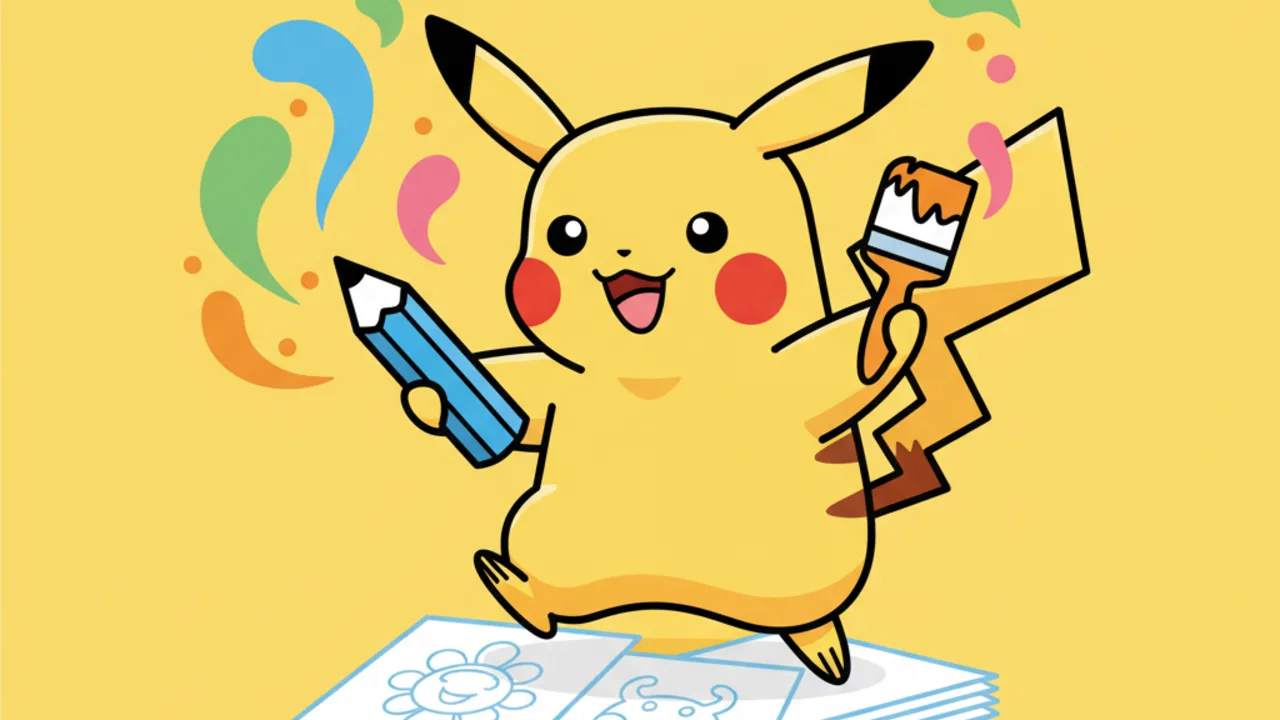
Aprenda como desenhar o Pikachu com este tutorial passo a passo e aproveite diversos desenhos para colorir e imprimir grátis do Pokémon mais famoso do mundo.
Basic Fundamentals for Drawing Pikachu
To learn how to draw Pikachu, the first step is understanding the simplified anatomy of this iconic character. This Electric-type Pokémon is made of rounded shapes, which makes the process much easier for beginners and kids.
When searching for free printable coloring pages of Pikachu, you'll notice he is basically composed of two circles or ovals: one for the head and a slightly larger one for the body. This basic structure is the secret to keeping the proportions just right.
Start by sketching lightly with a graphite pencil, as you'll need to erase guide lines later. Here at Desenhando e Colorindo, we recommend practicing these geometric shapes before adding the details that give our yellow friend his personality.
Artist Tip: Use a very light touch during the initial sketching phase. If you press too hard, the marks will remain visible even after you color in with your favorite colored pencils.
Step-by-Step: The Head and Pointy Ears
Pikachu's head isn't a perfect circle; it’s slightly flattened at the cheeks to give him that adorable look. Draw a cross in the center of the head to help position the eyes, nose, and mouth symmetrically.
The ears are one of his most striking features. They are long and end in sharp points. Remember that the tips of Pikachu's ears are black—an essential detail when looking for coloring activities or creating your own line art for kids.
Position the ears coming off the top of the head at slightly different angles to give your drawing some movement. If you are using our coloring sheets as a reference, you’ll see how the ear tilt helps express the Pokémon's emotions.
Drawing the Expressive Face of the Most Famous Pokémon
Pikachu's eyes are large, dark circles with a tiny white highlight at the top. This shine is crucial for bringing the character to life. Just below, the nose is just a small inverted triangle or a delicate dot.
The mouth can be drawn as a soft "w" when he is smiling. But what really defines the face are the circular red cheeks. These electric pouches are where Pikachu stores his energy and are a favorite for those who love coloring for kids.
Try to keep the eyes horizontally aligned. Whether you are creating a digital coloring book or just practicing on paper, facial symmetry will make your drawing look professional and true to Nintendo's original design.
Recommended Materials for Drawing and Coloring
To get the best results in your educational drawings, it’s important to have the right tools on hand. While you can use any paper, heavier weight sheets help if you decide to use markers or watercolors.
- HB or 2B Pencils: Ideal for the initial sketch as they are easy to erase.
- Soft Eraser: Essential for removing guide lines without damaging the paper surface.
- Fineliner or Black Marker: Great for the final line art outline.
- Colored Pencils or Crayons: In yellow, red, black, and brown.
- A4 Paper: Perfect for those who want to print free drawings from our site.
How to Draw the Body and Bolt-Shaped Tail
Pikachu's body should be a bit wider at the base, giving him a stable and chubby appearance. The arms are short and end in tiny pointed fingers, while the legs are sturdier to support his quick jumps.
The tail is the main focus point. It is shaped like a lightning bolt, symbolizing his electric powers. One important detail many forget is the brown patch at the base of the tail. When looking for cute drawings to practice, always look for these small anatomical details.
Draw the tail's bolt with sharp, angular lines to create an interesting contrast with the rounded body shapes. This adds dynamism to your printable art and makes the learning process more complete.
Exploring Poses for Online Coloring
Once you master the classic standing pose, you can try drawing Pikachu running, jumping, or using his "Thunderbolt" attack. Each pose offers a new challenge for your AI-generated art or manual drawing skills.
A sitting Pikachu is a favorite for coloring pages because it highlights his round belly. On the other hand, a battle pose requires more fluid lines and determined facial expressions, with squinted eyes and sparks flying from his cheeks.
At Desenhando e Colorindo, we offer various options for inspiration. Practicing different angles helps you understand the character's three-dimensionality, turning simple printable coloring sheets into actual art anatomy lessons.
Shading Techniques to Add Volume
To keep your Pikachu from looking flat, add light shadows to the lower part of the body and under the ears. Use a darker yellow or a soft ocher for the shaded areas. This transforms a free drawing into a vibrant piece of art.
Shading should follow an imaginary light source. If the light comes from above, the bottom of the belly and the opposite side of the tail should be slightly darker. This technique is widely used in professional kids' line art to guide visual perception.
Finalizing Your Line Art with Ink
After finishing the pencil sketch, use a black pen to outline the final drawing. Wait for the ink to dry completely before erasing the graphite to avoid smudges. This is the standard process for creating your own print-at-home coloring pages.
Keep your hand steady but relaxed. Continuous lines look much better than short, choppy strokes. If you make a mistake, don't worry; even great artists use mistakes to create interesting new details in their educational art.
Benefits of Coloring and Drawing Characters
Drawing well-known characters like Pikachu brings numerous benefits to motor and creative development. Besides being a relaxing activity, it helps with concentration and shape/color recognition.
- Fine Motor Skills: Controlling the pencil to follow outlines improves handwriting.
- Spatial Awareness: Understanding proportions helps with visual perception.
- Creative Expression: Choosing different background colors or accessories personalizes the work.
- Stress Reduction: Coloring is a form of active meditation for both adults and children.
Whether you are a teacher looking for coloring activities for the classroom or a parent wanting quality entertainment, drawing combines fun and learning in a unique way.
Frequently Asked Questions
What is the best color for Pikachu?
Vibrant yellow (Canary Yellow) is the official color. For the cheeks, use a bright red, and for the ear tips and eyes, use black. Details on the back and the base of the tail should be dark brown.
Can I use gouache to color my printed drawings?
Yes, but we recommend printing on thicker paper (like 180g offset) so the water doesn't warp the sheet. Gouache allows you to create incredible textures on free printable coloring pages.
How do I make the shine in Pikachu's eyes?
When drawing the black circle for the eye, leave a small white circle unpainted in the top corner. If you've already colored it all black, you can use white-out or a white gel pen to create that light dot.
Where can I find more Pokémon drawings to print?
Right here at Desenhando e Colorindo! We have an entire category dedicated to printable coloring pages of various Pokémon, as well as animals, nature, and other famous pop culture characters.
Conclusion
Learning how to draw Pikachu is a fun journey that opens doors to exploring the world of art and painting. With basic circles and ovals, anyone can recreate this beloved pocket monster. Remember to keep practicing and don't be afraid to make mistakes—every stroke is a lesson. Now that you know the techniques, why not get started? Browse our gallery, pick your favorite free printable coloring sheets, grab your pencils, and start creating your own colorful world right now!
Escrito e revisado por Armando Amaro
Fundador do Desenhando e Colorindo. Todo artigo passa por curadoria e revisão humana antes de ser publicado.