How to Draw and Color Different Eye Shapes
28 de agosto de 2026
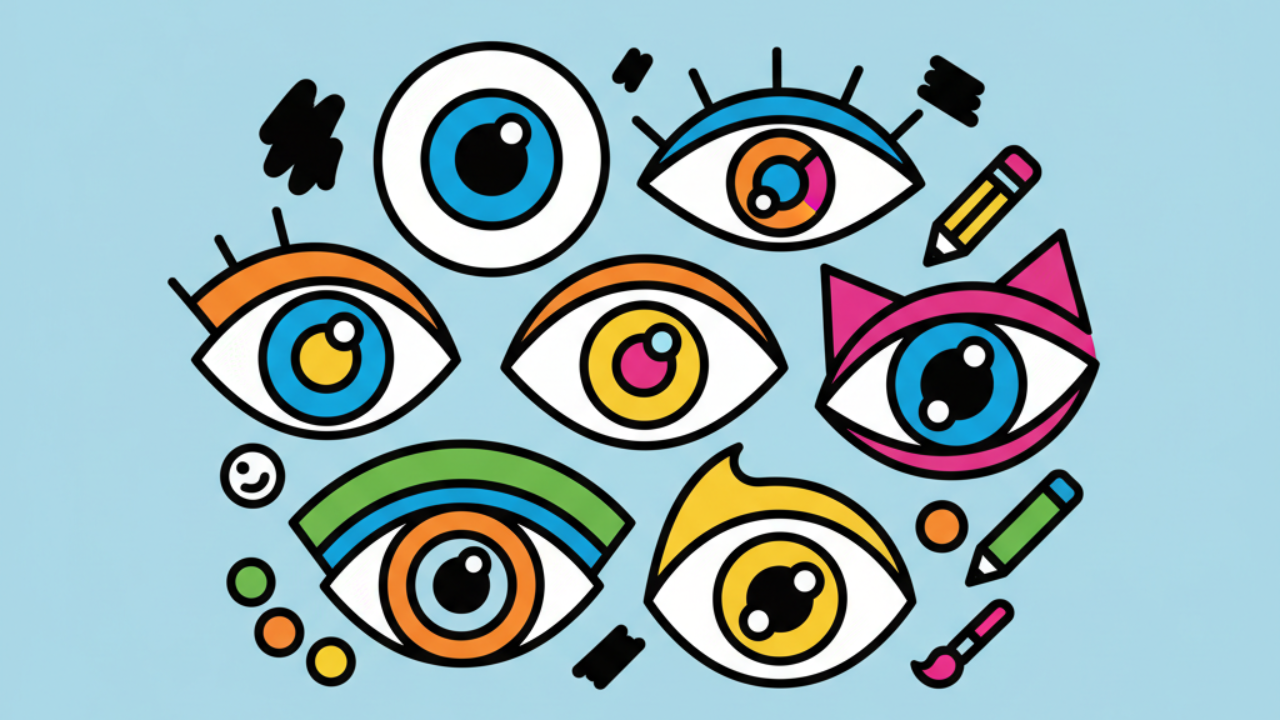
Learn how to draw and color different eye shapes with our complete guide. Download exclusive coloring pages and practice your art at Drawing and Coloring! 🎨✨
Drawing eyes is one of the most fascinating parts of the artistic journey, as they are often called the windows to the soul. At Desenhando e Colorindo, we know that mastering different eye shapes can transform a simple sketch into an expressive work of art. Whether you're creating animation characters or practicing realism, understanding anatomy and geometric variations is the first step to success.
This August, take advantage of the quiet vibes to focus on the details. Consistent practice with free printable coloring pages helps develop the spatial awareness needed to capture the essence of every gaze. Let’s explore how every curve and line contributes to a face's visual identity.
Understanding Basic Eye Anatomy
Before diving into the diversity of shapes, it's essential to understand the basic structure of the human eye. The eyeball is, as the name suggests, a sphere, but only a fraction of it is visible through the eyelid opening. When using our anatomy-focused coloring pages, you'll notice the importance of the tear duct and the upper eyelid folds.
The upper eyelid usually covers a small part of the iris, while the lower lid typically just touches the bottom edge of the colored circle. Practicing with simplified kids' line art helps beginners understand these divisions before moving on to more complex shading techniques.
Pro tip: When drawing, remember that the distance between both eyes is generally equal to the width of a third eye positioned in the center of the face.
The Importance of the Iris and Pupil
The iris is where the color magic happens. Using educational drawings, you can experiment with gradient tones, going from dark at the edges to light near the pupil. The pupil, meanwhile, should always be centered, and the highlight (light reflection) is what brings immediate life to the gaze.
Main Eye Shapes to Draw
There are infinite variations of eye shapes, and each conveys a different personality. Knowing these variations is fundamental for anyone looking to create cute drawings or heroic characters. Below, we detail the most common styles you'll find in our digital coloring book.
Almond Eyes
The almond shape is characterized by slightly lifted outer corners and a width greater than its height. It is considered one of the most versatile and aesthetically balanced shapes. When printing your coloring activities, try using soft shadows in the corners to highlight this elegant curvature.
Downturned Eyes
Eyes with the outer corner lower than the inner corner create a look of melancholy, sweetness, or fatigue. They are very common in classic cartoon characters to generate empathy in the viewer. The secret here is to focus on the upper eyelid line that gently slopes down at the end of the iris.
Monolid Eyes
Common in various ethnicities, monolids have a flat eyelid without the characteristic visible crease. They offer a larger surface to work on color filling and are excellent for practicing the use of AI tools that generate diverse ethnic references.
- Round Eyes: Show more of the sclera (white part) and convey surprise or innocence.
- Upturned Eyes: Convey cunning and energy.
- Deep-Set Eyes: Characterized by prominent brow bones that create natural shadows.
How to Color Eyes with Realism and Creativity
Coloring eyes goes beyond just picking blue, green, or brown. It involves layers. At Desenhando e Colorindo, we encourage using colored pencils, markers, or even online coloring techniques to explore textures. The secret to realism lies in the contrast between the shadow cast by the upper eyelid and the lighting at the bottom of the iris.
Layering Technique for Depth
Start with a light base color across the entire iris. Then, use a darker shade to outline the outer edge (the limbal ring). Add radial lines moving from the center outward, mimicking the natural fibers of the eye. This creates incredible depth in your printable art.
Using Highlights and Reflections
The white light spot should never be forgotten. It’s the game-changer that makes the eye look wet and alive. If you're using AI-generated drawings, you'll notice the AI often places multiple light points to simulate outdoor environments. You can replicate this manually by leaving white spaces on the paper.
Eye Styles in Different Media
Eye shapes change drastically depending on the art style you’re following. Desenhando e Colorindo offers options for every taste, from classic to modern.
Manga and Anime Style Eyes
In the world of anime, eyes are usually disproportionately large to maximize expressiveness. They are filled with sparkles, vibrant colors, and dramatic lashes. It’s a favorite style for kids in our coloring pages, as it allows for almost unlimited creative freedom with neon colors and fantasy gradients.
Western Cartoon Eyes
Unlike manga, Western cartoons tend to simplify eyes into basic geometric shapes: perfect circles, ovals, or even just black dots. This simplicity is ideal for beginners starting to explore coloring activities at home or school.
Tips for Practicing Eye Drawing Daily
The best way to learn how to draw different eye shapes is through observation and repetition. We’ve selected some practical strategies for your artistic routine:
- Use Mirrors: Observe your own eye and try to draw it in different expressions (smiling, angry, sad).
- Print References: Access our free printable coloring pages section and use the line arts as a base for tracing or shape study.
- 100 Eyes Challenge: Try drawing 100 different shapes in a week. Repetition builds muscle memory.
- Mix Styles: Try drawing a realistic eye on one side and a cartoon eye on the other to understand shape simplification.
Printing Tip: To color with markers, prefer higher-weight paper (above 120g) so the ink doesn't bleed through to the other side of the page.
Eye Drawing FAQ
How do I know which eye shape I'm drawing?
The best way is to identify the inner and outer corners. If the outer corner is higher, it's upturned; if it's on the same line, it's almond; if there's a lot of white visible below the iris, it's a round eye.
What is the best color to start coloring the iris in printable drawings?
We recommend starting with honey or light brown tones, as these colors are easy to layer and allow for smooth transitions to darker greens or browns, making it easier to learn gradients.
Can I use a white gel pen for highlights?
Absolutely! A white gel pen is an excellent tool for adding final touches of shine to coloring pages after you've already filled the area with pencils or regular markers.
Why do my drawn eyes look "lifeless"?
Usually, this happens due to a lack of contrast or the absence of a light point. Make sure the pupil is deep black and that there is a pure white spot to simulate ambient light reflection.
Conclusion
Mastering different eye shapes opens a world of possibilities for your artistic creations. At Desenhando e Colorindo, we are committed to providing the best resources so you, your family, or your students can explore this art for free. Don’t wait—choose your next project now: browse our gallery, pick your favorite coloring pages, and start bringing your characters to life today. Let your imagination run wild with the best printable coloring pages!
Escrito e revisado por Armando Amaro
Fundador do Desenhando e Colorindo. Todo artigo passa por curadoria e revisão humana antes de ser publicado.