How to Draw Realistic Trees: Line Art Guide for Kids
31 de agosto de 2026
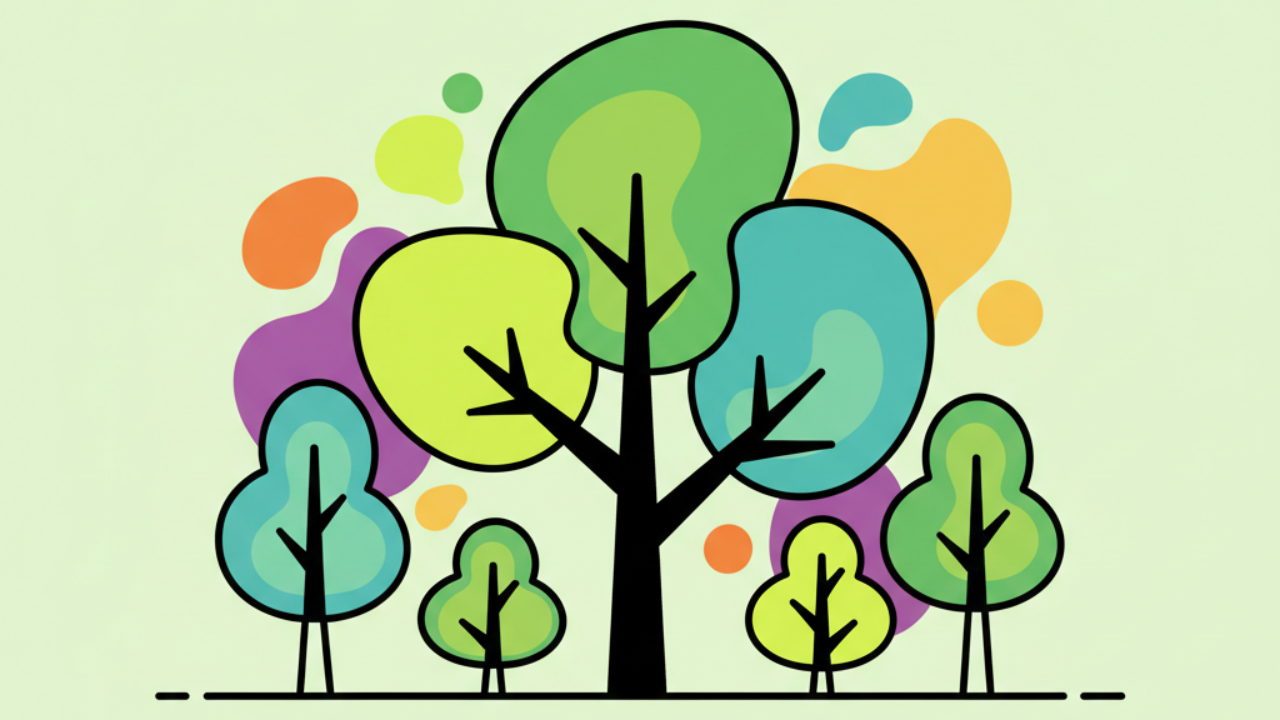
Learn how to draw realistic trees and add natural details to your scenery with our exclusive line art guide. Free to color and print! 🌳✨
Trunk Fundamentals: The Foundation of Your Line Art
To start creating realistic tree coloring pages, the first step is understanding the trunk's structure. At Desenhando e Colorindo, we always encourage observing nature. A trunk isn't a perfect cylinder; it has textures, knots, and leans that bring kids' line art to life.
When drawing the trunk, start at the base, making it slightly wider where it meets the ground. This gives your drawing visual stability. Remember that when looking for high-quality printable art, tree anatomy is what sets a detailed masterpiece apart from a simple doodle.
Use irregular strokes to represent the bark. If you're using our AI drawing tools, you'll notice the AI often adds deep grooves. Try to replicate this manually to train your spatial perception and motor skills.
Branch Structure and the Branching Rule
Branches follow a logical pattern that makes creating complex coloring sheets much easier. Imagine the main trunk splitting into two, and those two splitting into two more. This progression creates a visually rich digital coloring book that's exciting for kids to explore with their crayons.
Branches should never be too straight. In a realistic coloring activity, curves suggest the weight of the leaves and the movement of the wind. Make sure the branches get thinner as they move away from the main trunk, creating a harmonious silhouette for free printing.
When finishing the structure, check for negative space. In online coloring, these spaces are essential so users can apply background colors like the sky or clouds without cluttering the main image.
Pro Tip: When drawing branches for your line art, try not to cross them excessively. Leave open spaces so the child has the freedom to fill them with different shades of green or brown without smudging the main outlines.
Adding Realistic Bark Textures
Texture is what makes educational drawings fascinating. There are many types of bark: smooth, rough, peeling, or spotted. To create a convincing texture on your coloring page, use short, random hatching marks.
If your goal is a cute drawing, you can soften these lines. If it's a serious botanical study, go heavy on the groove details. This creates natural shadow areas that help during coloring for kids, guiding where the color should be darker.
Explore these texture variations for your drawings:
- Vertical Lines: Ideal for pine trees and cold-climate trees.
- Scales: Perfect for palm trees or tropical species.
- Irregular Circles: Represent the "eyes" or wood knots in eucalyptus trunks.
- Stippling/Dots: Great for adding volume to younger, smoother trunks.
Drawing Foliage: Volume Masses vs. Individual Leaves
A common mistake when creating printable drawings is trying to draw every single leaf. This makes the image look messy. Instead, think in terms of "foliage masses." Draw clouds or organic shapes that represent groups of leaves.
Within these masses, you can add small details on the edges to suggest the leaf type (jagged, oval, or pointed). This makes it much easier for those using the coloring activities on the Desenhando e Colorindo website, as it allows for gradient techniques.
Consider the light here. Leave the top of the foliage masses with fewer internal details, simulating direct sunlight. The bottom parts should have more shadow lines, creating depth in your kids' line art.
Integrating the Tree into a Natural Setting
A tree by itself is just an object, but integrated into a scene, it tells a story. To create complete and cute drawings, add elements at the base like grass, rocks, or small wildflowers. This anchors the tree to the paper.
Consider the horizon. If the tree is in the foreground, it should be very detailed. If it's in the background, only a basic silhouette is needed. This technique is widely used in AI-generated drawings to create perspective and depth.
Don't forget exposed roots. Some ancient trees show their roots above ground, adding a dramatic and realistic touch to your printable art. It's an invitation for kids to use earthy tones and explore soil textures.
Tree Types to Diversify Your Drawing Portfolio
To keep coloring activities interesting, it's important to vary the species. For example, springtime often brings flowering trees that are excellent models for online coloring due to their vibrant colors.
Here are some tree suggestions for you to practice:
- Oak: Robust trunk and twisted branches, ideal for fantasy settings.
- Weeping Willow: Thin branches that fall like waterfalls, great for practicing fluid lines.
- Pine Tree: Classic triangular shape, perfect for line art beginners.
- Cherry Blossom: Total focus on the flower mass, almost completely ditching green leaves.
Final Tips for Printing and Painting
After finishing your drawing, check if the lines are properly closed. This is essential for those who like online coloring using the paint bucket tool. Open lines cause the color to "leak" into the rest of the scenery.
If you're going to print for free, make sure the contrast is high. Gray lines might disappear during printing, while well-defined black lines make it easier to use markers, colored pencils, or crayons. At Desenhando e Colorindo, we prioritize clarity to ensure the best educational experience.
Also, consider the paper. For printable art that will be painted with gouache or watercolor, it's best to use a higher weight paper (above 120g). For regular colored pencils, standard printer paper works perfectly.
Frequently Asked Questions
How do I make a tree look 3D in a coloring drawing?
To create a 3D effect, add more shadow details (hatching) on one side of the trunk and at the bottom of the leaf masses. This simulates a side light source, giving the image volume.
What's the best paper for printing educational drawings?
Standard A4 printer paper is excellent for colored pencils and crayons. If the child is using paint, we recommend thicker paper to prevent the sheet from wrinkling or tearing during the activity.
Can I use AI to create my own tree drawings?
Yes! At Desenhando e Colorindo, we offer AI tools that help generate custom line art bases, which you can then finish and detail manually for a unique touch.
How do I draw leaves simply for kids?
Instead of drawing leaf by leaf, draw cloud outlines around the branches and add small "v" shapes or heart shapes on the edges to suggest foliage in a playful and cute way.
Now that you've learned the fundamental techniques for drawing realistic trees, how about putting them into practice? Browse our categories, pick your favorite templates, and start creating amazing scenes right now. Remember to print for free and share your coloring pages with friends and family to spread art and creativity!
Escrito e revisado por Armando Amaro
Fundador do Desenhando e Colorindo. Todo artigo passa por curadoria e revisão humana antes de ser publicado.