How to Color Flash the Sloth: Color Guide & Tips
06 de novembro de 2026
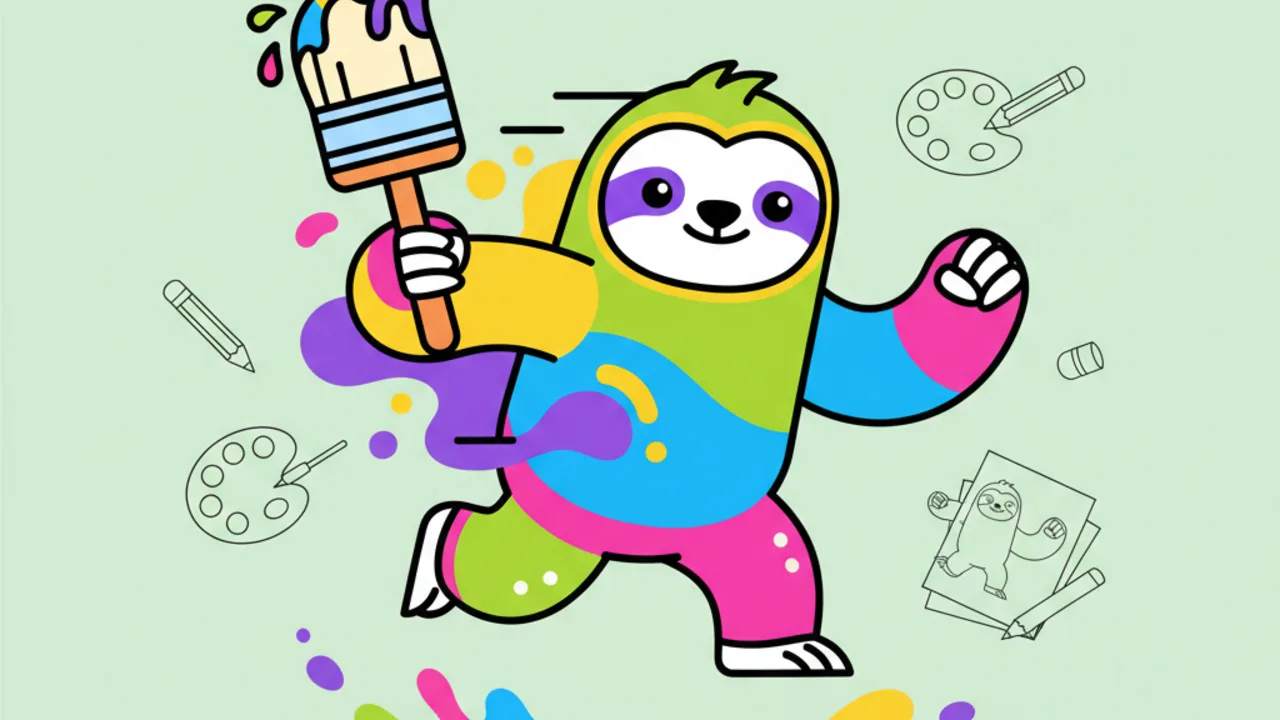
Learn how to color Flash the Sloth with our easy guide. Download free printable coloring pages and have fun creating your own custom Zootopia art! 🦥
Learning how to color Flash the Sloth is a relaxing activity that requires patience, just like the Zootopia character himself. In this complete guide from Desenhando e Colorindo, we'll explore the best techniques to bring this iconic character to life using our collection of free printable coloring pages. If you are looking for an educational activity for this November, sitting down with the kids and exploring earthy tones is an excellent choice.
Choosing the Best Materials to Paint Flash
Before you start applying colors to your printable coloring sheets, it's essential to select the right tools. Flash has a very specific color palette based on shades of beige, brown, and gray, which makes colored pencils the most versatile option.
Colored pencils allow you to build layers, which is vital for simulating a sloth's fur texture. If you prefer a more vibrant finish, markers can be used for facial details like the eyes and nose, while crayons work well for filling in large areas of kids' line art.
For those who prefer technology, online coloring is also an alternative, but nothing beats the tactile experience of printing a blank sheet and watching the art take shape through your hands. Remember to use slightly heavier weight paper if you decide to use paints or watercolors to ensure the drawing doesn't warp during the process.
Main Colors for the Character Palette
- Light Brown and Beige: For most of the body and face.
- Dark Gray or Graphite: For the shadows around the eyes and the claws.
- Teal or Pale Blue: For the dress shirt he wears at the DMV counter.
- Yellow and Orange: For the tie details, which provide a fun contrast to his sober look.
Step-by-Step: How to Color Flash the Sloth
The secret to great results in coloring activities is to start with the lightest colors. In Flash's case, begin by applying a light layer of beige to the entire face and body. This will serve as the base for the shadows that follow.
Next, use a medium brown to define depth in areas like the arm folds and the curve of his back. Sloths have slow movements and a hunched posture, so shading the lower part of the body helps give that sense of weight and calm characteristic of the character.
Work on the eyes with great care. Flash has distinct dark circles that are part of his charm. Use a shade of gray or dark brown around the eyelids, blending lightly outwards. This ensures he looks like he's always about to let out a very long, slow laugh, just like in the movie.
Pro Tip: To simulate fur, don't paint in circular motions. Use small, quick, short strokes in the direction the fur would naturally grow. This gives a realistic texture effect to your digital coloring book or printed page.
Texturing Techniques for Fur
Many people ask how to add realism to educational drawings. When it comes to animals, texture is everything. Since Flash is a sloth, his fur is thick and often looks a bit messy. You can use the "hatching" technique, crossing small lines to create darker areas.
Another cool trick is to use a white pencil or liquid white-out to add tiny highlights to the eyes and nose. This brings immediate life to the character. If you're using our AI-generated drawings, you'll notice the outlines are crisp, making it much easier for those just starting out in fine arts.
Tips for Coloring Flash's Clothes
Unlike other wild animals, Flash wears human clothes. His shirt should be painted with cool colors to contrast with the warm tones of his fur. Try to make a smooth gradient on the tie, starting with a strong yellow at the base and lightening towards the knot. This draws the eye to the center of the drawing and creates an interesting focal point on your coloring pages.
Benefits of Coloring Activities for Kids and Adults
Painting Flash the Sloth isn't just fun; it's an exercise in patience. For children, it helps develop fine motor skills and color nuance recognition. For adults, it works as stress-relief therapy, allowing for a moment of disconnection and total focus on printable art.
This November, taking some free time to print cute drawings can be the perfect family project. Teachers can also use these drawings in the classroom to discuss wildlife and the characteristics of slow mammals, blending art and science in a playful way.
How to Get the Best Printing Results
To ensure your kids' line art looks perfect, check your printer settings. Select the "High Quality" option and make sure the drawing is adjusted to the A4 paper print area. At Desenhando e Colorindo, all our files are optimized so you don't lose any detail from the original strokes.
- Use regular printer paper for colored pencils.
- Prefer cardstock or offset paper for markers.
- Check the black ink level to avoid gaps in the outlines.
- Always print an extra copy to test color combinations before the final version.
The Psychology of Colors in Flash the Sloth
Have you ever wondered why Flash wears such neutral colors? Beige and brown convey stability and calm, which perfectly match his personality. When choosing how to color Flash the Sloth, you can opt for original Disney colors or let your imagination run wild and create a psychedelic or colorful version.
There are no hard rules in art. If you want Flash to have blue fur, go for it! The important thing is creative expression. Our free printable coloring pages serve as a blank canvas for your talent, regardless of your age or skill level.
Frequently Asked Questions
What is the best base color for Flash?
The best base color is light beige or a sand tone. These colors allow you to add layers of brown on top without making the drawing excessively dark from the start.
Can I use watercolors on the printable drawings?
Yes, you can, but it's recommended to print on paper over 180g so the water doesn't tear the sheet. Watercolor gives a very beautiful fluid and artistic effect to Flash.
Where can I find the Flash drawing to download?
You can find several options of printable coloring pages of Flash the Sloth and other characters directly here on the Desenhando e Colorindo website, under the animation category.
How do I create a shadow effect on the face?
For facial shadows, use a brown pencil slightly darker than the base and apply light pressure to the sides of the cheeks and under the chin. Blend with a cotton swab or a blending stump for a professional finish.
Conclusion
Mastering the art of coloring characters like Flash the Sloth is a rewarding journey that blends technique and patience. We hope this guide has inspired you to grab your pencils and explore the full creative potential our materials offer. Don't wait—pick your favorite free printable coloring pages here at Desenhando e Colorindo and start your next masterpiece today!
Escrito e revisado por Armando Amaro
Fundador do Desenhando e Colorindo. Todo artigo passa por curadoria e revisão humana antes de ser publicado.