How to Learn to Draw from Scratch: 5 Foolproof Techniques
09 de outubro de 2026
Discover the best ways to learn drawing from scratch with foolproof techniques, perfect for practicing on our free printable coloring pages.
Mastering the art of drawing requires patience and the right tools. For those looking to evolve, printable coloring pages serve as an excellent foundation for understanding proportions and depth before you even start creating your own compositions. In this guide, we'll explore how you can go from absolute zero to a satisfying artistic level using practical methods.
1. The Basic Geometric Shapes Technique
Every complex object in the world can be broken down into simple shapes: circles, squares, triangles, and cylinders. When looking at our animal coloring sheets, you'll notice the head is often a circle and the body an ellipse.
Practicing your initial sketch using only these shapes helps train your eye for the drawing's internal structure. Before detailing, focus on positioning these shapes on the paper. This ensures the drawing doesn't end up crooked or out of proportion as you move toward the final details.
Try breaking down everyday objects. A mug is a cylinder; a slice of pizza is a triangle. By mastering the spatial perception of these shapes, you gain the confidence needed to start creating your own custom coloring pages from scratch.
2. Using References and Kids' Line Art
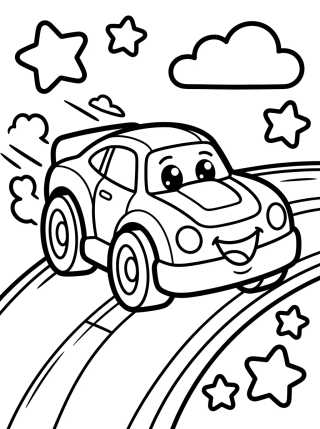
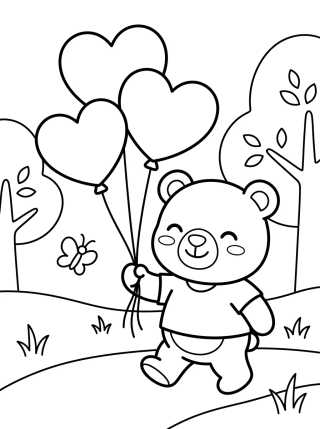
Many beginners mistakenly believe that drawing from memory is the only "correct" way. In fact, great artists use references constantly. Using the line art for kids available on our site is a smart way to train fine motor skills.
By observing how a line contours a character, you learn about the flow of the stroke. You can print our drawings and try to replicate the outline on a blank sheet next to it, comparing distances between eyes, arm height, and leg curvature.
3. Pressure Control and Line Exercises
Learning to draw involves physical technique. The pressure you apply to the pencil defines whether the drawing looks heavy or light and fluid. Daily hatching and gradient exercises are fundamental for those who want to evolve beyond basic educational drawings.
- Straight lines: Try drawing several parallel lines without a ruler to gain steadiness.
- Infinite circles: Make light circular motions repeatedly in the same spot to loosen your wrist.
- Pressure gradient: Color a small square going from the darkest shade (high pressure) to the lightest (barely touching the paper).
- Blind contour: Try drawing an object without looking at the paper, only at the reference, to connect brain and hand.
These exercises prepare you to better use digital coloring books and physical tools, ensuring every shadow and line has a specific purpose in your artwork.
4. Anatomy and Proportion for Beginners
If your goal is to draw characters, understanding anatomy is the logical next step. You don't need to memorize every muscle, but understanding that the human body follows rules of proportion (like the average height being seven heads) keeps your drawings from looking "off."
Use our cute drawings to observe how proportions vary in different styles. "Chibi" style characters, for example, have huge heads and small bodies, while realistic drawings require stricter facial distance measurements.
Practice by drawing stick-figure skeletons over photos or free printable coloring pages. This helps visualize where joints like shoulders, elbows, and knees are located, allowing you to create more dynamic and natural poses in the future.
5. The Importance of Light and Shadow in Drawing
What differentiates a flat drawing from a 3D one is the application of light. Even in simple coloring activities, you can start applying shading concepts to give volume to characters and objects.
Identifying the Light Source
Before shading, define where the light is coming from (top left, right, etc.). The areas opposite the light will receive the densest shadows. This creates the illusion of depth that makes the drawing look more professional and eye-catching.
Shading Techniques
You can use the blending technique, where you soften the graphite with a paper stump or your finger, or the cross-hatching technique for a more artistic, stylized look. Practicing these techniques on free drawings to print is the most cost-effective way to test your new knowledge.
6. Using Technology: AI-Generated Drawings
In today’s world, technology is an ally. AI-generated drawings can serve as a source of inspiration and composition study. By observing how an AI generates an image, you can analyze color choices and the layout of elements on the canvas.
Additionally, online coloring allows you to experiment with color schemes quickly before moving to physical paper. This versatility helps beginner artists lose the fear of making mistakes, as digital allows for instant corrections.
7. Staying Consistent and Creating a Habit
Drawing is both a motor and cognitive skill. It does no good to practice for ten hours in a single day and then stop for the rest of the month. Consistency—15 to 30 minutes daily—will bring much more solid results in the long run.
Create an environment conducive to practice. Always keep your pencil kit, eraser, and, of course, a stack of art to print from Desenhando e Colorindo handy. Alternating between creating from scratch and coloring ready-made illustrations prevents creative block and keeps motivation high.
Frequently Asked Questions
What is the best material to start drawing?
For beginners starting from zero, a standard HB pencil, a 2B for shadows, A4 printer paper, and a soft eraser are enough. As you evolve, you can invest in higher-weight paper and specific line art pencils.
How long does it take to learn how to draw well?
Time varies for everyone, but with daily practice, you can see significant progress in three to six months. The secret is focusing on fundamentals like basic shapes and proportion before trying complex details.
Can I use coloring pages to train my line work?
Yes! Using printable coloring pages is an excellent technique called tracing or contour observation, which helps develop muscle memory and an understanding of how lines form complex images.
Is drawing on paper better than digital drawing?
Neither is inherently better. Paper helps develop manual control and tactile sensitivity, while digital offers easier editing features. We recommend starting on paper to master basic pressure and stroke concepts.
Conclusion
Learning to draw is a rewarding journey that blends technique, observation, and lots of practice. By using the resources available at Desenhando e Colorindo, you have access to a vast library to hone your skills. Don't be afraid to make mistakes and remember that every stroke is one step closer to artistic mastery. Now, go ahead and pick your favorite free printable coloring pages and start practicing your new techniques today!
Escrito e revisado por Armando Amaro
Fundador do Desenhando e Colorindo. Todo artigo passa por curadoria e revisão humana antes de ser publicado.