Primary and Secondary Color Mixing for Kids: Fun Activities
02 de agosto de 2026
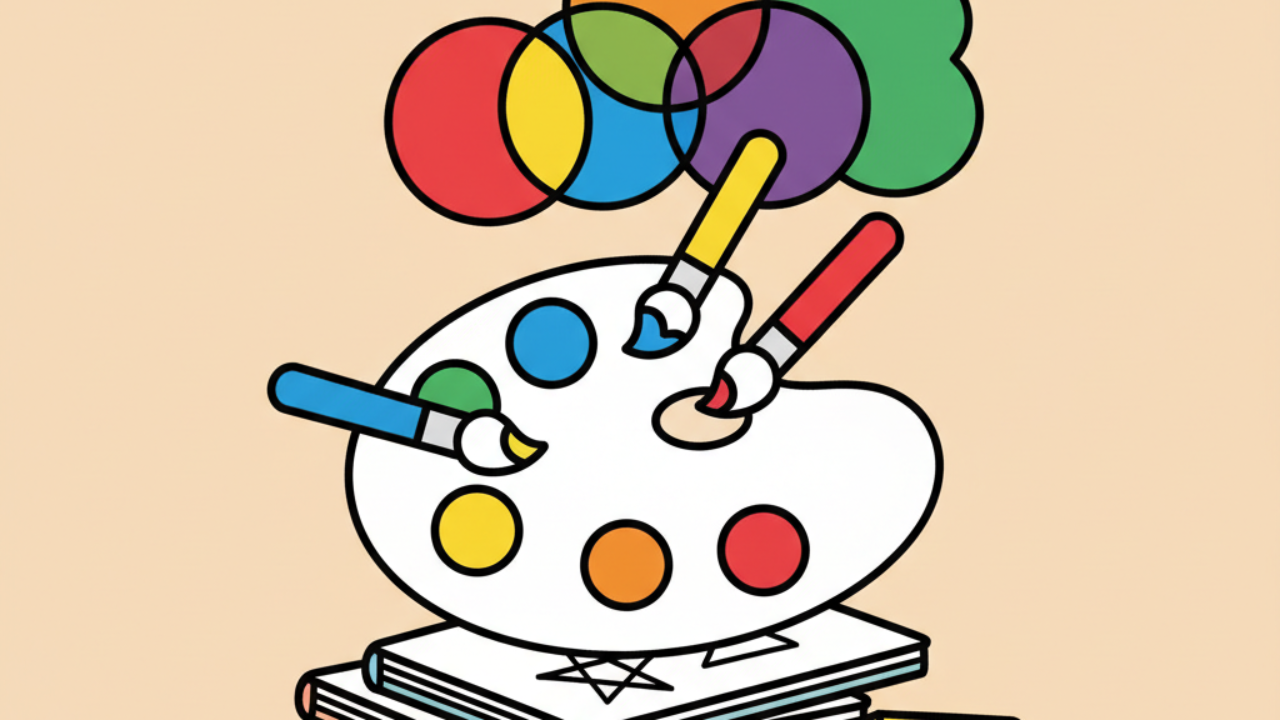
Discover how to teach primary and secondary colors using fun coloring pages. Download free activities on Draw & Color to learn through creative play.
The Magic of Primary Colors in Coloring Pages
The first step in introducing the world of art to little ones is presenting the primary colors: red, blue, and yellow. At Desenhando e Colorindo, we believe the best way to reinforce this concept is through coloring activities that focus on one shade at a time, allowing the child to identify the color in nature and everyday objects.
By offering free coloring pages to print, you give children the freedom to experiment with the intensity of each pigment. Using crayons or colored pencils in these fundamental colors helps develop visual perception and fine motor skills, paving the way for more complex mixing later on.
Coloring Tip: Start with drawings of simple fruits, like an apple (red), a banana (yellow), and a whale (blue). This helps the child associate the primary color with a real-world element.
Using well-defined kids' line art is essential at this stage. Drawings with thick outlines and large areas make it easier for little hands—still learning how to hold a pencil—to fill in the spaces, ensuring that learning primary colors is a positive and rewarding experience.
Discovering Secondary Colors with Creative Mixing
Once the little ones have mastered the basic colors, it’s time to introduce the magic of secondary colors: green, orange, and purple. Explaining that blue meeting yellow results in green is much more impactful when done hands-on, through a digital coloring book or a printed one.
At this stage, printable art that allows for color layering is ideal. If a child uses paints or watercolor pencils on our educational drawings, they will see the secondary color emerge before their eyes, stimulating scientific curiosity and aesthetic sense from an early age.
Below, we detail the fundamental combinations to teach students or children:
- Green: The balanced mix of Blue and Yellow, ideal for coloring forests and lawns.
- Orange: The vibrant result of Red and Yellow, perfect for sunsets and flowers.
- Purple (or Violet): The sophisticated combination of Blue and Red, excellent for grapes and fantasy characters.
How to Use August-Themed Drawings to Practice Color Theory
During the month of August, schools often ramp up playful activities. Taking advantage of coloring pages with themes like wind, kites, or the start of the transition to spring is an excellent pedagogical strategy. You can propose challenges where specific areas of the line art must be filled in using only secondary colors.
The versatility of the cute drawings available on our portal allows teachers to create educational sequences. For example, coloring a whole page using only cool tones (blues and greens) and another with warm tones (reds and oranges), exploring color psychology in a simplified way for kids.
Additionally, online coloring is a fantastic complementary tool. At Desenhando e Colorindo, children can test combinations digitally before moving to paper, saving resources and allowing for endless trial and error.
Painting Techniques to Stimulate Children's Creativity
Beyond just filling in spaces, teaching painting techniques enriches the experience with free coloring pages to print. Hatching, pointillism, and shading can be adapted for younger children using primary and secondary colors as a base.
Encourage the child not to use just one flat color. If they are coloring a tree, suggest using different shades of green (a secondary color) and maybe a little yellow (primary) to simulate sunlight on the leaves. This transforms a simple coloring activity into a real art class.
Printing Tip: When printing your line art, prefer paper weights above 90g if you plan to use markers or paints, preventing the back of the sheet from being damaged by moisture.
The AI-generated drawings we provide also offer textures and details that challenge a child's perception. By coloring these complex pieces, little ones learn about depth and contrast—crucial elements for visual literacy.
The Role of Educators and Parents in the Artistic Process
Adult mediation is fundamental. When downloading coloring pages, try to guide without restricting. Ask: "Which primary color do we need to make the orange for this pumpkin?". This type of questioning stimulates logical reasoning and color memory.
Turning coloring time for kids into a family event strengthens bonds. Sitting at the table with colored pencils and various printables creates a calm and focused environment, away from excessive screen distractions, promoting relaxation for adults and learning for the little ones.
Pedagogical Benefits of Educational Drawings
Studies show that using educational drawings to teach colors accelerates information retention. A child's brain processes visual and tactile data better when they occur simultaneously. When a child touches the crayon and sees the blue pigment turn green as it goes over yellow, the neural connection is much stronger than just hearing a theoretical explanation.
We've listed some key benefits of this practice below:
- Development of fine motor skills by filling in outlines.
- Vocabulary expansion by naming new shades and mixes.
- Increase in patience and the ability for prolonged concentration.
- Stimulation of self-expression and aesthetic decision-making.
To maximize these gains, diversify materials. Use crayons, colored pencils, gouache, and even collages with cut-out colored paper on our kids' line art. Each material offers a different resistance and a unique perception of primary and secondary colors.
Exploring Technology with AI-Generated Drawings
Modernity has reached the world of manual arts. At Desenhando e Colorindo, we use AI-generated drawings to create unique patterns you won't find anywhere else. This allows specific themes, like "galaxy animals" or "candy castles," to be explored with a wealth of detail that invites painting.
These AI tools generate coloring pages that can be customized. If you are looking for something specific for a science class, like the water cycle, you can find or generate line art that uses blue (primary) in various nuances, helping the child understand gradients and shadows intuitively.
Frequently Asked Questions
What are the 3 primary and 3 secondary colors?
The primary colors are red, blue, and yellow. The secondary colors, which arise from mixing the primaries, are green (blue + yellow), orange (red + yellow), and purple (blue + red).
What is the best age to teach colors with drawings?
From age 2 or 3, children start to distinguish tones. Using free printable coloring pages with large shapes is ideal at this stage to facilitate the visual recognition of primary colors.
Can I print the drawings from the site to use in the classroom?
Yes! All our coloring pages to print are free and intended for educational and recreational use. Teachers can download as many copies as needed for their school activities.
How do I encourage a child who doesn't like to color?
Try offering drawings of themes they love, like superheroes, animals, or cute vehicles. Also, use the online coloring tool on our site to spark initial interest through technology before moving to paper.
Now that you know the pedagogical importance of colors and how primary and secondary mixes can be taught in a fun way, how about starting right now? Explore our vast gallery at Desenhando e Colorindo, pick your favorite art, and get your colored pencils ready. Let your imagination run wild with the best coloring pages, print them for free, and turn learning into a moment of pure joy and creativity!
Escrito e revisado por Armando Amaro
Fundador do Desenhando e Colorindo. Todo artigo passa por curadoria e revisão humana antes de ser publicado.