Combinação de cores primárias em desenhos educativos para pintar
15 de setembro de 2026
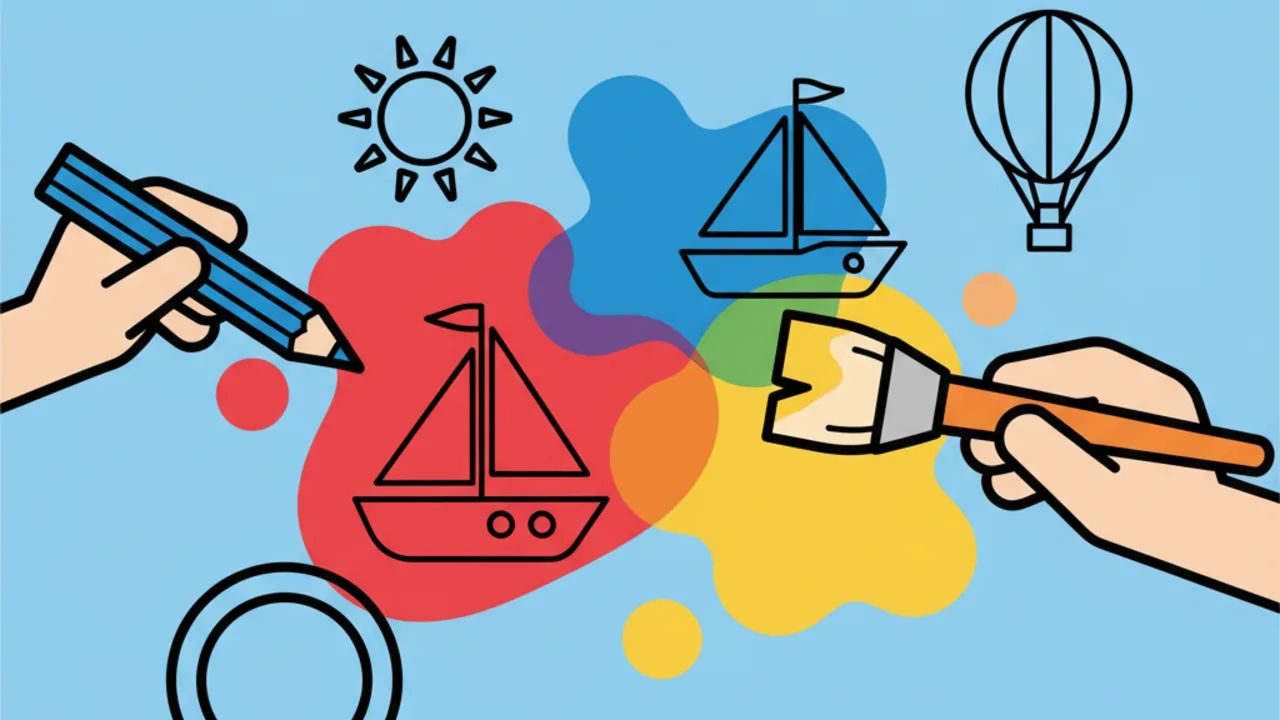
Aprenda sobre cores primárias com desenhos para colorir e imprimir! Uma atividade educativa de artes perfeita para crianças praticarem pintura e criatividade.
What are Primary Colors and How to Use Them in Coloring Pages
Primary colors are the foundation of the entire color spectrum we know. In the world of fine arts, they are represented by red, blue, and yellow. The fundamental concept is that these colors are pure, meaning they cannot be created by mixing other hues. In our free printable coloring pages, understanding this base helps children develop a much sharper visual perception.
By offering coloring sheets focused on educational concepts, we allow little ones to experience color theory in practice. When a child holds a blue colored pencil and layers it over yellow, they discover the magic of creating green. This type of kids' line art is a powerful pedagogical tool that transforms leisure time into real, tangible art learning.
Working with educational drawings during the school season is an excellent strategy for teachers and parents. Using printable art focused on primary colors stimulates fine motor skills and spatial understanding, preparing students for more complex design and painting concepts in the future.
Exploring Red, Blue, and Yellow in Coloring Activities
Red is vibrant and is usually the color that stands out the most in cute coloring pages. It represents energy and warmth. Encouraging the use of red in drawings of apples, hearts, or flowers helps the child immediately associate the color with elements of nature. It is one of the easiest colors to apply in coloring activities for beginners.
Blue, on the other hand, brings a sense of calm and depth. It is the ideal color for filling large areas in free drawings that depict the sky or the sea. While coloring with blue, the child learns about tones and layering, varying the pencil pressure to obtain different intensities. Our digital coloring book offers several options where blue takes center stage.
Yellow is the color of light and joy. In free printable coloring pages of suns, sunflowers, or ducklings, yellow brightens the page. It is an excellent color for teaching about brightness and contrast, especially when placed next to blue or red. The combination of these three colors on a single sheet creates a balanced and educational visual impact.
Pro tip: When printing your drawings, prefer paper weights above 90g if you plan to use markers or paints, to prevent primary colors from bleeding through the sheet and staining the back.
How to Create Secondary Colors from Printable Drawings
The transition from primary to secondary colors is one of the most fun moments for those who enjoy coloring for kids. Secondary colors (orange, green, and purple) arise from the equal mixing of two primaries. Using printable coloring sheets that feature geometric shapes or simple mandalas is perfect for this exercise.
To get orange, the child should paint lightly with red and then go over it with yellow. Green arises from the union of blue and yellow, and purple is born from the mix between blue and red. Teaching this through AI-generated drawings that create repetitive patterns makes it easier for the child's brain to fix the visual content.
Here at Desenhando e Colorindo, we encourage you to download multiple copies of the same drawing. This way, the child can try painting one version with only primary colors and another version experimenting with mixtures. This comparative method is essential for developing creativity and logical reasoning in the field of visual arts.
Pedagogical Benefits of Primary Colors
- Cognitive Development: Identifying and naming colors stimulates specific areas of the brain linked to language.
- Artistic Experimentation: The use of coloring pages allows testing the limits of mixing without fear of making mistakes.
- Focus and Concentration: Coloring inside the lines requires full attention, acting as an active meditation.
- Autonomy: Choosing which primary color to use first gives the child a sense of control over their work.
Painting Techniques for Educational Drawings
There are several ways to apply primary colors in kids' line art. The most common technique is solid filling with colored pencils. However, using crayons or watercolors can bring very interesting textured results. When we use printable coloring pages, we are giving a blank canvas for the emotional expression of whoever is painting.
The pointillism technique is excellent for teaching primary colors. Instead of painting an entire area, the child can make small red and yellow dots very close together. From a distance, the human eye will begin to see orange. This transforms the coloring activity into a fascinating optical physics experiment for elementary school students.
Another method is shading. By using only blue, for example, it is possible to create depth just by varying the hand's pressure. This teaches that a single primary color has an infinite scale of possibilities. Our free drawings are designed with clear lines precisely to allow these techniques to be applied without interference.
Practical Activities with Free Printable Coloring Pages
To make learning more dynamic, teachers can create a "Color Challenge." Hand out educational drawings and ask students to use only three pencils: red, blue, and yellow. The goal is to see who can create the most different shades using only these basic tools.
This limitation stimulates creativity. Often, having all the colors available in the box inhibits experimentation. With only primary colors, the child is forced to think about how to achieve the desired result. Desenhando e Colorindo offers a vast library of printable art that perfectly fits this type of school or home dynamic.
Additionally, using online coloring on tablets or computers can be an initial step. Although the physical experience of paper is irreplaceable for motor coordination, digital tools allow for quickly undoing mistakes, which helps more anxious children gain confidence before moving on to printable drawings.
Recommended Materials List
- Watercolor pencils: Great for demonstrating color mixing with a damp brush.
- A4 paper: The ideal standard for most home printers.
- Triangular crayons: Easier for smaller children who are discovering colors to grip.
- High-quality sharpener: Keeping the tips sharp helps with details in the line art.
The Importance of Contrast in Coloring Pages
Contrast is what makes a drawing "pop." When using primary colors, contrast is naturally high. Blue and yellow, for example, are colors that stand out strongly next to each other. Teaching children to identify these contrasts in cute drawings of animals or characters helps in the visual structuring of any artistic work.
In nature drawings, the contrast between the blue sky and a yellow sun is the classic example we all learn early on. However, in more complex AI-generated drawings, we can find patterns where primary colors are used to guide the viewer's eye to the main point of the image. This is the beginning of the study of visual composition.
Encouraging the use of the paper's white as a "color" is also important. Leaving spaces unpainted can create light and shine, complementing the intensity of the primary colors. Desenhando e Colorindo focuses on providing free printable coloring pages that have a balance between detailed areas and open spaces for this exploration.
Frequently Asked Questions
What are the 3 basic primary colors?
The three traditional primary colors in fine arts are Red, Blue, and Yellow. From them, all other colors can be created through mixing.
Can I print the drawings from the site to use at school?
Yes! All of our free printable coloring pages are released for educational, domestic, and recreational use. Feel free to share them with your students.
What is the best age to teach primary colors with drawings?
From age 2 or 3, children start to identify colors. Educational drawings are excellent for this stage, as they associate the color with a known shape.
How do I mix colored pencils to make green?
To make green in your coloring pages, first paint a soft layer of yellow and, on top, apply a layer of blue until you reach the desired shade.
Conclusion
Mastering the primary color combination is the first step for any young artist in training. Through the printable coloring pages on our site, this process becomes light, fun, and extremely educational. Whether at home or in the classroom, coloring activities promote benefits that go far beyond aesthetics, aiding in the child's overall development. Now that you know the theory, how about putting it into practice? Browse our categories, choose your favorite coloring sheets, and start printing right now to bring new colorful worlds to life!
Escrito e revisado por Armando Amaro
Fundador do Desenhando e Colorindo. Todo artigo passa por curadoria e revisão humana antes de ser publicado.