Fun Geometric Shapes Coloring Pages for Preschoolers
24 de setembro de 2026
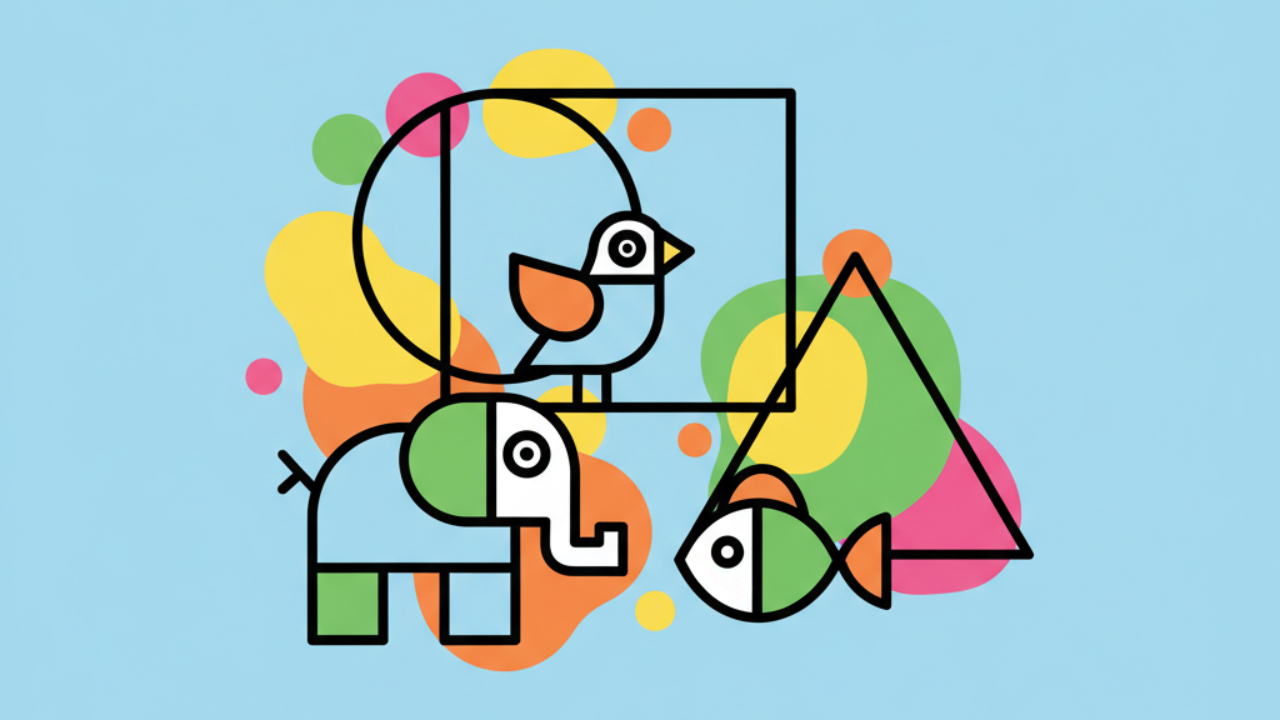
Get creative with geometric shape coloring pages for kids! Fun and educational painting activities to help toddlers learn shapes while they play. 🎨
The Importance of Geometric Shapes in Early Childhood Development
Working with geometric shape coloring pages is one of the most effective strategies in early childhood education. At Desenhando e Colorindo, we believe that art is the gateway to logical reasoning. By coloring a circle or a square, children begin to notice patterns that exist in the world all around them.
As the new school term approaches, coloring activities serve as an essential teaching tool. Teachers and parents can use these printable coloring pages to teach concepts of symmetry, directionality, and proportion, turning playtime into a fun learning moment.
Furthermore, using kids' line art focused on geometry helps with fine motor skills. Holding a pencil and staying within the lines of a triangle requires focus and muscle control—skills that are fundamental for literacy and mastering handwriting in the coming years.
Types of Geometry Coloring Pages to Print
There are several ways to apply geometry in preschool coloring activities. You can choose isolated shapes or complex compositions that form everyday objects. On our site, we offer a vast library of free drawings catering to all difficulty levels.
Basic and Simple Shapes
For the little ones, printable coloring sheets focused on circles, squares, triangles, and rectangles are highly recommended. They allow the child to identify the pure shape without excessive visual distractions. It’s the perfect starting point to introduce primary colors along with the names of the figures.
Creative Geometric Compositions
For slightly older children, coloring activities that transform shapes into robots, houses, or rockets are extremely stimulating. By coloring a square that serves as the base for a house, students exercise spatial awareness, understanding how different elements come together to form a meaningful whole.
Geometric Mandalas and Repetitive Patterns
Geometry-based mandalas are excellent educational drawings. They help with concentration and relaxation. Working with repetitive patterns encourages children to plan their color choices, creating a logical sequence that beautifies the final art and develops their aesthetic sense.
Pedagogical Benefits of Coloring Activities
Integrating a digital coloring book or physical printouts into the school curriculum brings benefits that go beyond entertainment. Coloring is a multisensory activity. By seeing the contrast between the white paper and the color fill, the brain processes complex visual information.
- Visual Recognition: Identifying shapes helps in reading letters and numbers later on.
- Emotional Expression: The choice of colors reflects the child's mood and personality.
- Persistence: Finishing a complete drawing teaches the child patience and task completion.
- Spatial Awareness: Understanding internal and external boundaries by coloring the edges of shapes.
When we use AI-generated drawings to create new variations of geometric patterns, we ensure the material is always fresh and challenging for the little ones, keeping interest high during art classes.
How to Organize a Lesson with Coloring Pages
To implement these activities efficiently, planning is key. It’s not enough to just hand out the paper; you need to mediate the experience. Start by introducing the "shape of the day." If it’s a circle, ask the kids to find round objects in the room before they start coloring cute drawings that use that shape.
Printing Tip: For drawings with large geometric shapes, use thicker paper (120g or 180g) if the child is going to use markers or gouache paint, preventing the paper from tearing or the ink from bleeding onto the table.
Another suggestion is to work with textures. Within the kids' line art of the shapes, children can glue pieces of paper, sand, or wool, creating a unique tactile experience combined with traditional coloring. The Desenhando e Colorindo website offers templates that facilitate this type of artistic intervention.
Exploring Creativity with Free Drawings
The free nature of our printable coloring pages gives educators total freedom. If a child doesn't like the result of their painting, they can try again on a fresh copy, which reduces frustration and encourages experimentation without the fear of making mistakes.
The versatility of geometric shapes also allows them to be used in interdisciplinary projects. Math meets art when we count how many sides the polygon we are coloring has. It’s an organic way to introduce mathematical concepts without the weight of formulas, using just coloring pages.
Different Painting Techniques
Beyond colored pencils, encourage the use of crayons, which are easier for small hands to handle. Using sponges to fill large areas of circles or squares also creates an interesting visual effect, making the coloring activity more dynamic and less tiring for students who are still developing motor skills.
Online Coloring vs. Paper Coloring
While online coloring is a great modern tool for digital development, physical contact with paper and pencil is irreplaceable in early childhood education. We recommend alternating between the two modes so that the child develops both analog and digital skills, taking advantage of the best our portal has to offer.
Tips for Downloading and Printing Your Drawings
To ensure the best quality for your printable art, follow a few simple steps on our site. Browse the categories, select the desired geometric drawing, and preview the high-resolution image before sending it to the printer. This ensures the lines remain crisp for the child.
- Make sure the printer is set to "high quality."
- Use the "fit to page" option to avoid cutting off the edges of the drawing.
- Create themed folders to organize drawings by difficulty (e.g., Simple Shapes, Compound Shapes, Mosaics).
- Whenever possible, print in black and white to save ink and highlight only the drawing's outline.
With these practices, you'll have an infinite supply of educational material. Desenhando e Colorindo constantly updates its collection with new geometric shape drawings, ensuring you always have something new to present in class or at home during leisure time.
Frequently Asked Questions
What are the best geometric shapes to start with for 3-year-olds?
The best ones are circles and squares. They have simple lines and are easily recognized in everyday objects like balls and boxes, making visual association easier during coloring.
How do I use geometric drawings to teach colors?
You can create pedagogical prompts, such as: "Color all the triangles blue and all the circles red." This stimulates shape perception and color identification simultaneously.
Can the drawings from the site be used in school projects?
Yes! All our free printable coloring pages are cleared for educational and home use. Teachers can print them in bulk to distribute to their students at no cost.
What is the advantage of using kids' line art with shapes?
Clean line art, without too many internal details, allows the child to focus on the structure of the shape. This helps in building logical thinking and visual organization of the page.
Conclusion
Activities involving geometric shapes are fundamental to building a solid foundation in childhood learning. By joining the fun of coloring with educational concepts, we provide balanced and enjoyable development. Don't wait—start exploring our collection right now! Visit Desenhando e Colorindo, pick your favorite printable coloring pages, and get your colored pencils ready for an amazing journey of creativity and discovery!
Escrito e revisado por Armando Amaro
Fundador do Desenhando e Colorindo. Todo artigo passa por curadoria e revisão humana antes de ser publicado.